Cost Optimization in Cloud Computing That Actually Works
Cost optimization in cloud computing is the process of reducing unnecessary spending while keeping your cloud systems running smoothly. This guide covers practical strategies, common mistakes, and expert tools that help you cut waste and save money. Whether you run a small business or manage enterprise workloads, these tips will transform how you handle cloud spending.
Cloud computing changed the way businesses operate. You get flexibility, scalability, and power without buying expensive hardware. But here is the catch. Many companies end up spending far more than they planned on their cloud infrastructure costs. The bills keep climbing, and nobody knows exactly where the money goes.
Cost optimization in cloud computing solves this problem. It is the practice of reducing unnecessary spending while keeping your systems fast, reliable, and secure. This article breaks down exactly how to do it. You will learn the most common reasons cloud costs spiral out of control, the best strategies to bring them back in line, and the tools that make it all easier.
Whether you are a startup just getting started with the cloud or an IT team managing complex workloads, this guide gives you actionable steps you can take today. No fluff. No jargon. Just real advice that delivers results.
Key Takeaways
- Right-sizing resources is the fastest way to eliminate cloud waste and lower your monthly bill.
- Reserved instances and savings plans can save you up to 70% compared to on-demand pricing.
- FinOps practices help teams track, allocate, and optimize costs across the entire organization.
- Auto-scaling and serverless options ensure you only pay for what you actually use.
- Cloud cost monitoring tools give real-time visibility into where your money goes every month.
- Common mistakes like idle resources and over-provisioning waste thousands of dollars each year.
- Building a cost-aware culture is the most sustainable way to keep cloud spending under control long-term.
📑 Table of Contents
- Why Cost Optimization in Cloud Computing Matters
- Common Causes of Cloud Cost Overruns
- Proven Strategies for Cost Optimization in Cloud Computing
- Tools That Help You Manage Cloud Spending
- Building a FinOps Culture for Long-Term Savings
- Measuring Success: Key Metrics for Cloud Cost Optimization
- Common Mistakes to Avoid
- Conclusion
Why Cost Optimization in Cloud Computing Matters
Cloud computing offers incredible value. But without careful management, it can become a money pit. Companies waste an average of 30% of their cloud budget on unused or underused resources. That is money that could go toward growth, innovation, or better products.
Cloud cost optimization matters because every dollar you save is a dollar you can reinvest. When you manage your spending wisely, you get more value from the same budget. Your team becomes more efficient, your applications run better, and your business stays competitive.
Beyond savings, proper cloud financial management also improves performance. When you right-size your resources and remove waste, your systems run leaner and faster. It is a win-win situation that benefits everyone in the organization.
The Hidden Cost of Cloud Waste
Cloud waste comes in many forms. Idle virtual machines that run 24/7 but do nothing. Over-provisioned databases that are way too large for the workload. Storage buckets full of old backups nobody ever looks at. These hidden costs add up fast.
Here are some examples of common cloud waste:
- Idle resources — servers or databases running with no active workload.
- Over-provisioned instances — paying for more CPU or memory than you actually need.
- Unattached storage volumes — orphaned disks that still cost money but serve no purpose.
- Unused snapshots and backups — old copies of data that nobody needs anymore.
- Excessive data transfer fees — charges from moving data between regions or services.
Fixing these issues alone can reduce your monthly bill by 20% or more. That is why cost optimization in cloud computing is not optional. It is essential.
Common Causes of Cloud Cost Overruns
Understanding why costs get out of control is the first step toward fixing the problem. Most cloud spending issues come from a few predictable sources. Let us look at them closely.
Poor Resource Allocation
When teams provision resources without tracking actual usage, costs quickly spiral. A developer might spin up a large instance for testing and forget to shut it down. Over weeks and months, these forgotten resources drain your budget silently.
Right-sizing cloud instances is the process of matching your resource size to your actual workload. Many teams start with oversized instances “just in case” and never go back to right-size them. This is one of the biggest drivers of unnecessary cloud spending.
Lack of Visibility and Accountability
If you cannot see where your money goes, you cannot control it. Many organizations lack proper cloud cost monitoring tools and processes. Without clear dashboards and ownership, costs become a shared mystery that nobody takes responsibility for.
This is where FinOps comes in. FinOps is a practice that brings financial accountability to cloud operations. It helps teams understand the cost of their work and make smarter decisions.
Ignoring Pricing Models and Discounts
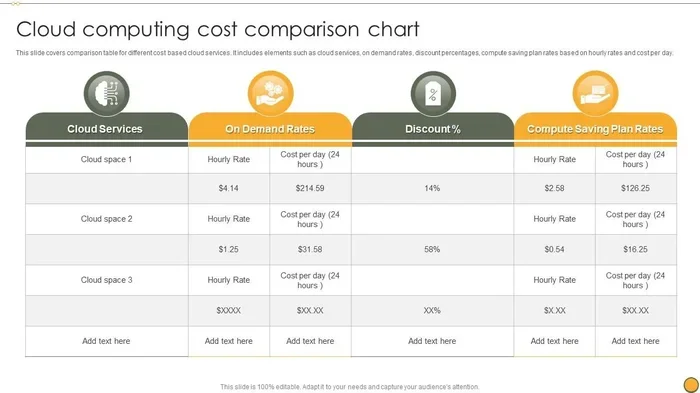
Cloud providers offer many pricing options. On-demand pricing is the most expensive. But there are cheaper alternatives like reserved instances, savings plans, and spot instances. Many teams simply stick with the default pricing without exploring these options.
For example, reserved instances can save you up to 70% compared to on-demand rates. If you have predictable workloads, this is one of the easiest ways to reduce costs significantly.
No Auto-Scaling or Elasticity
One of the biggest promises of the cloud is elasticity — the ability to scale up and down based on demand. But many setups run at full capacity all the time, even during low-traffic periods. Without proper auto-scaling rules, you pay for capacity you do not use.
Proven Strategies for Cost Optimization in Cloud Computing
Now let us get to the good stuff. These are the strategies that actually work for reducing cloud costs. You can start applying many of them today.
1. Audit Your Current Cloud Spending
You cannot optimize what you do not measure. Start by getting a complete picture of where your money goes. Most cloud providers offer built-in billing dashboards. Use them. Look at your spending by service, team, project, and region.
A thorough audit will reveal surprises. You might find that a single service accounts for 40% of your bill. Or that a test environment costs more than production. These insights are gold for making smart optimization decisions.
2. Right-Size Your Resources
Right-sizing means matching your compute, memory, and storage to your actual needs. This is one of the most impactful cost optimization in cloud computing techniques available.
Here is how to do it:
- Identify underutilized instances using CPU and memory metrics.
- Downsize instances that consistently run below 30% utilization.
- Upgrade instances that are consistently over 80% utilization.
- Schedule non-production resources to shut down during off-hours.
This simple practice can cut your compute costs by 25-40% in many cases.
3. Leverage Reserved Instances and Savings Plans
If you have workloads that run 24/7, reserved instances or savings plans are a no-brainer. You commit to a one- or three-year term and get significant discounts in return.
Cloud pricing models comparison:
- On-Demand — Pay as you go. Most expensive. Best for unpredictable workloads.
- Reserved Instances — Commit for 1-3 years. Save up to 70%. Best for steady-state workloads.
- Savings Plans — Flexible commitment. Save up to 72%. Works across instance families.
- Spot Instances — Bid on unused capacity. Save up to 90%. Best for fault-tolerant workloads.
Choosing the right model for each workload is a core part of cloud cost management.
4. Implement Auto-Scaling and Serverless
Auto-scaling automatically adjusts your resources based on real-time demand. During peak hours, it adds capacity. During quiet periods, it scales down. You only pay for what you use.
Serverless computing takes this even further. With serverless, you do not manage servers at all. You just run code, and the provider charges you per execution. This is perfect for event-driven workloads and APIs.
Serverless cost optimization is especially effective for workloads with unpredictable traffic patterns. You avoid paying for idle capacity entirely.
5. Clean Up Unused Resources Regularly
Set up automated cleanup policies. Delete unattached volumes, old snapshots, and unused IP addresses on a regular schedule. Many teams set up weekly or monthly cleanup routines that prevent waste from accumulating.
Tagging your resources is another powerful habit. When every resource has a tag showing who owns it and what project it belongs to, it becomes much easier to identify orphaned or unused assets.
6. Use Multi-Cloud Cost Management
If your organization uses more than one cloud provider, managing costs becomes more complex. Multi-cloud cost management tools give you a single view of spending across AWS, Azure, Google Cloud, and others. This makes it easier to compare pricing, identify waste, and negotiate better deals.
Tools That Help You Manage Cloud Spending
The right tools make cost optimization in cloud computing much easier. Here are some of the most popular and effective options.
Native Cloud Tools
Every major cloud provider offers built-in cost management tools. AWS Cost Explorer, Azure Cost Management, and Google Cloud Billing all provide detailed insights into your spending. These tools are free to use and integrate directly with your environment.
They offer features like:
- Budget alerts that notify you when spending exceeds thresholds.
- Cost breakdowns by service, tag, and department.
- Rightsizing recommendations based on actual usage patterns.
- Forecasting tools that predict future spending trends.
Third-Party Cost Optimization Platforms
For more advanced needs, third-party tools offer deeper analysis and automation. Platforms like CloudHealth, Spot.io, and Apptio Cloudability provide cross-cloud visibility, policy enforcement, and automated optimization features.
Cloud cost anomaly detection is a standout feature of many of these tools. They alert you when spending spikes unexpectedly, so you can investigate and fix issues before the bill arrives.
FinOps Platforms
FinOps platforms go beyond simple cost tracking. They help you build a culture of financial accountability across your organization. Tools like Harness Cloud Cost Management and CloudZero connect engineering teams with financial data in real time.
Building a FinOps Culture for Long-Term Savings
Tools and strategies are important. But the most successful cost optimization in cloud computing efforts come from a cultural shift. This is what FinOps is all about.
What Is FinOps?
FinOps is a set of practices that brings financial operations and cloud engineering together. It ensures that everyone who uses cloud resources understands the cost impact of their decisions. When developers know that leaving a server running overnight costs real money, they become more mindful.
Steps to Build a FinOps Practice
- Assign cloud cost ownership to specific teams or individuals.
- Set up budgets and alerts for every team and project.
- Share cost reports regularly so everyone sees where the money goes.
- Create cost-conscious workflows that include financial impact in decision-making.
- Celebrate savings and recognize teams that optimize their spending.
When FinOps becomes part of your DNA, cost optimization stops being a one-time project. It becomes a continuous process that delivers ongoing savings.
Measuring Success: Key Metrics for Cloud Cost Optimization
How do you know if your efforts are working? You need to track the right metrics. These numbers tell the story of your cloud cost management performance.
Cost per Workload
This metric shows how much each application or service costs to run. It helps you compare efficiency across different workloads and identify the most expensive ones to optimize.
Cost Avoidance vs. Cost Savings
Cost avoidance means you prevented spending that would have happened (like using reserved instances instead of on-demand). Cost savings means you reduced existing spending (like rightsizing instances). Both matter, but they measure different things.
Cloud Waste Percentage
This is the percentage of your total cloud spend that goes toward unused or wasted resources. A healthy target is below 10%. Many organizations start at 25-30% and bring it down significantly with the right strategies.
Unit Economics
Unit economics measures the cost of delivering a specific unit of business value — like cost per customer, cost per transaction, or cost per user. This metric ties your cloud spending directly to business outcomes.
Tracking these metrics over time shows you whether your optimization efforts are paying off. It also helps you justify further investment in cloud financial management tools and processes.
Common Mistakes to Avoid
Even with the best intentions, teams make mistakes that undermine their cloud cost optimization efforts. Here are the most common ones to watch out for.
- Ignoring small costs. Small daily charges add up to thousands over time. Every resource matters.
- Not setting budgets. Without budgets, there is no way to know if spending is out of control until the bill arrives.
- Overlooking data transfer fees. Moving data between services or regions can be surprisingly expensive.
- One-size-fits-all pricing. Using the same pricing model for every workload leaves money on the table.
- No regular reviews. Cloud environments change constantly. What was optimal last month may not be optimal today.
Avoiding these mistakes keeps your optimization efforts on track and delivers consistent results over time.
Conclusion
Cost optimization in cloud computing is not a one-time fix. It is an ongoing discipline that delivers real, lasting results. By auditing your spending, right-sizing resources, leveraging discounts, and building a FinOps culture, you can dramatically reduce your cloud bills while improving performance.
The strategies in this guide work. They are proven by thousands of organizations that have successfully brought their cloud spending under control. The key is to start small, measure your progress, and keep refining your approach. Every dollar you save is a dollar that fuels your business growth.
Take action today. Pick one strategy from this article and implement it this week. You will be surprised at how quickly the savings add up. Cloud cost optimization is well worth the effort, and the results speak for themselves.
Frequently Asked Questions
What is cost optimization in cloud computing?
Cost optimization in cloud computing is the process of reducing unnecessary spending on cloud resources while maintaining performance and reliability. It involves right-sizing instances, eliminating waste, leveraging pricing discounts, and building cost-aware workflows across your organization.
How much can you save with cloud cost optimization?
Most organizations save between 20% and 40% on their cloud bills after implementing optimization strategies. Some companies save even more, especially when they commit to reserved instances or identify large amounts of unused resources. The exact savings depend on your current setup and how consistently you apply best practices.
What is FinOps and how does it help with cloud costs?
FinOps is a practice that brings financial accountability to cloud operations. It helps teams understand the cost impact of their decisions, set budgets, and optimize spending continuously. FinOps creates a culture where everyone takes responsibility for cloud cost management, leading to long-term savings and better resource use.
What are the best tools for cloud cost optimization?
Native tools like AWS Cost Explorer, Azure Cost Management, and Google Cloud Billing are great starting points. For advanced needs, third-party platforms like CloudHealth, Spot.io, and CloudZero offer deeper analysis, cross-cloud visibility, and automated optimization features that help you manage cloud spending more effectively.
How often should you review cloud costs?
You should review cloud costs at least monthly, with weekly spot-checks for active optimization work. Cloud environments change constantly, and regular reviews help you catch waste early. Setting up automated alerts and dashboards makes ongoing cloud cost monitoring much easier.
Is serverless always cheaper than traditional cloud computing?
Not always. Serverless is cost-effective for event-driven and sporadic workloads because you only pay per execution. But for steady, high-volume workloads, traditional instances with reserved pricing can be cheaper. The best approach is to evaluate each workload individually and choose the model that fits your usage patterns best.