Leading Private Cloud Computing Companies for Business
Private cloud computing companies offer businesses a secure, dedicated cloud environment tailored to their unique needs. These providers deliver private cloud solutions with enhanced control, compliance, and performance compared to public cloud options. In this guide, we explore the leading private cloud computing companies, their key features, and how to choose the best fit for your organization.
Private cloud computing has transformed how businesses handle their data and applications. Instead of sharing resources with thousands of other organizations, companies can now own their entire cloud infrastructure. This shift has opened doors for better security, faster performance, and greater control. Today, we are diving deep into the world of private cloud computing companies that make this possible.
Whether you are a small business owner or an IT leader at a large corporation, understanding your options matters. The right private cloud solutions can save money, boost efficiency, and keep sensitive data safe. In this article, we will walk through the top providers, compare options, and help you find the best fit. Let us get started.
Key Takeaways
- Private cloud gives businesses dedicated resources: Unlike shared public clouds, private cloud offers exclusive infrastructure for better security and control.
- Several top providers stand out: Companies like VMware, Dell Technologies, and IBM lead the private cloud market with robust solutions.
- Private cloud vs public cloud matters: Understanding the differences helps businesses make informed decisions about their cloud computing services.
- Compliance and security are key drivers: Many organizations choose private cloud deployment to meet strict regulatory requirements.
- Choosing the right provider requires evaluation: Consider factors like scalability, cost, support, and integration capabilities.
- The private cloud market is growing fast: More enterprises are adopting dedicated cloud environments for mission-critical workloads.
📑 Table of Contents
- What Is Private Cloud Computing?
- Why Businesses Choose Private Cloud Solutions
- Leading Private Cloud Computing Companies
- Private Cloud vs Public Cloud: Key Differences
- How to Choose the Right Private Cloud Provider
- Quick Tips for a Successful Private Cloud Implementation
- Common Mistakes to Avoid
- The Future of Private Cloud Computing
- Final Thoughts
What Is Private Cloud Computing?
A private cloud is a cloud computing platform dedicated to one organization. It is not shared with other users. This setup can live on your own premises or be hosted by a third-party provider. Either way, you get exclusive access to all the resources.
Think of it like owning a house versus renting an apartment in a big building. With a private cloud, you control everything. You decide who gets access, how resources are allocated, and what security measures are in place. This is why many enterprises prefer private cloud deployment for their most important workloads.
Key Features of Private Cloud
- Dedicated resources: Your servers, storage, and networking are not shared with anyone else.
- Enhanced security: Because access is restricted, your cloud security features are much stronger.
- Customization: You can tailor the environment to match your exact business needs.
- Compliance readiness: Many private cloud companies build their platforms to meet strict industry regulations.
- Scalability: Modern private cloud solutions can grow as your business grows.
Now that we understand the basics, let us look at why so many businesses are making the switch to private cloud.
Why Businesses Choose Private Cloud Solutions
The move to cloud computing for business is not new. But the shift toward private cloud has accelerated in recent years. Here are the main reasons organizations are choosing dedicated cloud environments over shared ones.
1. Superior Security and Control
Security is the number one reason companies choose private cloud hosting. When your data lives on a shared public cloud, you share the same physical hardware with other tenants. While providers do a great job with security, some businesses simply cannot risk that exposure.
With private cloud infrastructure, you control every layer. You manage access policies, encryption keys, and network configurations. This level of control is essential for industries like healthcare, finance, and government.
2. Regulatory Compliance
Many industries face strict data handling rules. Healthcare organizations must follow HIPAA. Financial institutions must comply with PCI-DSS. Government agencies have their own set of mandates. Private cloud deployment makes it much easier to prove compliance during audits.
Leading cloud computing providers offer compliance certifications built into their platforms. This saves businesses time and money on meeting regulatory requirements on their own.
3. Predictable Performance
In a public cloud, your performance can be affected by other users. This is called the “noisy neighbor” problem. With a dedicated cloud environment, you get consistent performance every time. No sharing, no contention, no surprises.
4. Customization and Flexibility
Every business is different. Private cloud solutions let you build an environment that fits your exact workflows. You choose the operating systems, applications, and networking setups that work best for you.
This flexibility is a huge advantage. You are not stuck with one-size-fits-all configurations. Instead, you design a system that truly supports your goals.
Leading Private Cloud Computing Companies
The market for private cloud computing companies is crowded with strong contenders. Each provider brings something unique to the table. Let us explore the top players and what they offer.
VMware (Broadcom)
VMware has been a pioneer in virtualization and private cloud architecture for decades. Now part of Broadcom, VMware offers a comprehensive suite of tools for building and managing private clouds. Their vSphere platform is one of the most widely used virtualization solutions in the world.
VMware excels at helping businesses migrate from on-premises servers to a private cloud environment. Their solutions support both traditional applications and modern containerized workloads. The company also offers strong managed cloud services for organizations that want hands-off management.
Best for: Large enterprises with complex IT environments and existing VMware investments.
Dell Technologies
Dell Technologies provides end-to-end cloud infrastructure providers solutions. They offer hardware, software, and services that work together seamlessly. Dell’s private cloud offerings are built on open standards, which gives businesses flexibility and avoids vendor lock-in.
One of Dell’s strengths is its hardware expertise. They design servers, storage, and networking equipment specifically for cloud computing services. This means their private cloud solutions are optimized for performance and reliability.
Best for: Organizations that want integrated hardware and software for their on-premises cloud setup.
IBM Cloud Private
IBM has a long history in enterprise computing, and their private cloud platform is no exception. IBM Cloud Private combines the power of IBM’s enterprise software with modern cloud-native capabilities. It is designed to run on-premises or at the edge.
IBM stands out for its AI and analytics capabilities. Their platform integrates Watson and other AI tools directly into the private cloud environment. This makes IBM a strong choice for businesses looking to leverage advanced analytics alongside their cloud infrastructure providers.
Best for: Enterprises focused on AI, data analytics, and hybrid cloud strategies.
HPE (Hewlett Packard Enterprise)
HPE offers a powerful private cloud platform called HPE GreenLake. This solution brings cloud-like flexibility to on-premises environments. You pay as you go, just like a public cloud, but your data stays on your own hardware.
HPE GreenLake supports a wide range of workloads, from traditional applications to modern cloud-native development. Their scalable cloud infrastructure is designed to grow with your business needs. HPE also provides strong support and professional services to help with cloud migration services.
Best for: Businesses that want a pay-as-you-go model with the security of private infrastructure.
Oracle Cloud
Oracle is a heavyweight in the enterprise software world, and their private cloud offerings are built for mission-critical workloads. Oracle Cloud Infrastructure (OCI) can be deployed on-premises, giving businesses the power of Oracle’s cloud platform behind their own firewalls.
Oracle’s strength lies in its database and ERP software. If your organization already runs Oracle applications, their private cloud solutions offer a natural and seamless extension. The integration between Oracle’s software and cloud platform is hard to beat.
Best for: Organizations already using Oracle software and databases.
Nutanix
Nutanix has carved out a strong niche in the private cloud market. Their platform combines compute, storage, and networking into a single, easy-to-manage system. Nutanix makes it simple to build a private cloud architecture without needing a huge IT team.
One of Nutanix’s biggest advantages is simplicity. Their hybrid cloud platform lets businesses run workloads across private and public clouds with ease. This makes Nutanix a great choice for organizations exploring a hybrid cloud strategy.
Best for: Mid-sized businesses and those looking for a simple, integrated private cloud solution.
Private Cloud vs Public Cloud: Key Differences
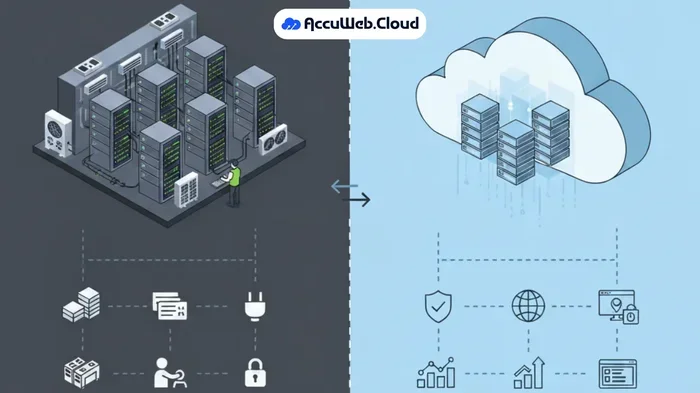
Understanding the difference between private cloud vs public cloud is essential for making the right choice. Let us break down the key differences in a clear comparison.
| Feature | Private Cloud | Public Cloud |
|---|---|---|
| Resource Sharing | Dedicated to one organization | Shared across multiple tenants |
| Security | High control over access and encryption | Provider-managed security |
| Compliance | Easier to meet strict regulations | May not meet all industry standards |
| Cost | Higher upfront investment | Pay-as-you-go, lower entry cost |
| Customization | Highly customizable | Limited to provider options |
| Scalability | Scalable within your infrastructure | Virtually unlimited scalability |
| Management | You manage or hire a provider | Provider manages everything |
Both models have their place. Many businesses today use a hybrid cloud platform that combines the best of both worlds. Sensitive data stays in the private cloud, while less critical workloads run in the public cloud.
How to Choose the Right Private Cloud Provider
Selecting the right private cloud computing companies partner is a big decision. Here are the factors you should evaluate before making a choice.
1. Assess Your Business Needs
Start by understanding what your business actually needs. Do you need cloud migration services? Or are you building a new private cloud architecture from scratch? Identify your current pain points and future goals. This clarity will guide your decision.
2. Evaluate Security and Compliance
Check whether the provider meets your industry’s cloud compliance standards. Look for certifications like SOC 2, ISO 27001, and HIPAA compliance. A strong private cloud provider will have these certifications readily available.
3. Consider Total Cost of Ownership
The upfront cost is only part of the picture. Factor in ongoing maintenance, support, training, and upgrades. Some providers offer managed cloud services that reduce your internal IT burden. This can actually lower your total cost over time.
4. Check Scalability
Your cloud infrastructure providers should be able to grow with you. Ask about scalability options and how easily you can add resources. A scalable cloud infrastructure ensures you are not stuck when your business expands.
5. Test Support and Service Level Agreements
Support matters more than most businesses realize. Look for providers with strong SLAs, 24/7 support, and responsive technical teams. When something goes wrong, you want help fast.
Quick Tips for a Successful Private Cloud Implementation
- Start small: Migrate one or two non-critical workloads first. Learn from the experience before moving mission-critical systems.
- Involve your team early: Get input from IT staff, security teams, and business stakeholders from day one.
- Plan for growth: Choose a private cloud platform that can scale with your business over the next 3 to 5 years.
- Document everything: Keep detailed records of your cloud architecture, configurations, and processes.
- Train your staff: Invest in training so your team can manage the new environment effectively.
Common Mistakes to Avoid
Many businesses stumble during their private cloud journey. Here are common pitfalls and how to avoid them.
- Underestimating costs: Private cloud requires upfront investment in hardware and software. Budget carefully and plan for ongoing expenses.
- Ignoring compatibility: Make sure your new private cloud solution works with your existing applications and systems.
- Skipping security planning: Security should be built in from the start, not added as an afterthought.
- Choosing the wrong provider: Not all cloud computing companies are the same. Do your research and choose a partner that aligns with your goals.
- Neglecting staff training: A new cloud environment is only as good as the people managing it.
The Future of Private Cloud Computing
The world of private cloud computing is evolving rapidly. New technologies are making private clouds more powerful, more accessible, and more affordable than ever before.
Edge Computing and Private Cloud
Edge computing brings processing closer to where data is generated. This is perfect for private cloud deployment at remote locations. As IoT devices grow, the demand for edge-based private cloud solutions will only increase.
AI Integration
Artificial intelligence is becoming a standard feature in private cloud platforms. AI helps optimize resource allocation, detect security threats, and automate routine tasks. Leading private cloud computing companies are investing heavily in AI-powered tools.
Sustainability
Green computing is a growing concern. Many cloud infrastructure providers are focusing on energy-efficient data centers and sustainable practices. Choosing a provider that prioritizes sustainability can help your business meet its environmental goals.
Final Thoughts
Choosing the right private cloud computing companies is a decision that can shape your business for years to come. Whether you prioritize security, compliance, performance, or flexibility, there is a provider out there that fits your needs.
Take the time to evaluate your options. Consider your current requirements and future goals. The best private cloud solutions are the ones that align with your unique business situation. Start exploring your options today, and take the first step toward a more secure, efficient, and scalable IT environment.
The world of cloud computing for business is changing fast. Staying informed and making smart decisions now will put you ahead of the curve. Trust in the right private cloud provider, and you will reap the benefits for years to come.
Frequently Asked Questions
What is the main difference between private cloud and public cloud?
A private cloud is dedicated to a single organization, giving you full control over resources and security. A public cloud shares infrastructure among multiple tenants, which makes it more cost-effective but less customizable.
Are private cloud solutions more expensive than public cloud?
Generally, yes. Private cloud requires upfront investment in hardware and software. However, the long-term benefits in security, compliance, and performance can outweigh the higher initial cost for many businesses.
Can small businesses benefit from private cloud computing?
Absolutely. Many private cloud computing companies offer solutions designed for businesses of all sizes. Small businesses can benefit from enhanced security, compliance readiness, and predictable performance.
What industries benefit most from private cloud?
Industries with strict data regulations, such as healthcare, finance, government, and legal, benefit greatly from private cloud deployment. However, any business that handles sensitive data can see value in a dedicated cloud environment.
How long does it take to migrate to a private cloud?
The timeline varies based on the size of your organization and the complexity of your current setup. Simple migrations can take a few weeks, while larger enterprises may need several months for a full cloud migration.
Do I need an in-house IT team for private cloud management?
Not necessarily. Many private cloud computing companies offer managed cloud services that handle day-to-day operations. This is a great option for businesses that want the benefits of private cloud without a large internal IT team.
=== CONCLUSION ===
Private cloud computing companies are reshaping how businesses manage their data and applications. From VMware and Dell to Nutanix and HPE, the market offers powerful options for every type of organization. By understanding your needs, evaluating your options, and avoiding common mistakes, you can find the perfect private cloud solution for your business.
The journey to a dedicated cloud environment does not have to be overwhelming. Start with the basics, involve your team, and choose a provider that shares your vision. The right private cloud platform will deliver security, performance, and growth for years to come.