Smart Approaches for Cloud Migration in Cloud Computing
Cloud migration is the process of moving your data, apps, and IT resources from on-premises systems to the cloud. This guide covers the top cloud migration strategies, including lift and shift, re-platforming, and cloud-native approaches. You will learn how to plan, execute, and optimize your cloud migration journey with practical tips and expert insights.
Every business today is moving to the cloud. Whether you are a small startup or a large enterprise, the benefits are hard to ignore. Cloud migration offers flexibility, scalability, and cost savings that traditional data centers simply cannot match. But the journey is not always smooth.
With the right cloud migration strategy, you can avoid common pitfalls and make the transition feel effortless. In this guide, we will walk you through the smartest approaches for migrating your workloads to the cloud. You will learn about different strategies, planning tips, and real-world best practices. By the end, you will have a clear roadmap to follow.
Key Takeaways
- Multiple migration strategies exist: Choose from lift and shift, re-platforming, re-architecting, and more based on your business needs.
- Planning is critical: A solid cloud migration roadmap reduces risk and ensures a smooth transition.
- Security and cost matter: Prioritize cloud security and cost optimization from day one of your migration.
- Common mistakes are avoidable: Learning from others’ missteps saves time, money, and effort.
- There is no one-size-fits-all: The best approach depends on your workloads, budget, and goals.
- Post-migration care is essential: Ongoing monitoring and optimization keep your cloud environment efficient.
📑 Table of Contents
What Is Cloud Migration and Why Does It Matter?
Cloud migration means moving your digital assets from local servers or data centers to cloud-based infrastructure. These assets include applications, databases, storage, and networking components. The goal is to leverage the power of cloud infrastructure without disrupting daily operations.
The cloud adoption trend has grown rapidly over the past decade. Companies across every industry are discovering that the cloud enables remote work, improves collaboration, and supports rapid growth. Cloud migration is not just a technology upgrade. It is a business transformation that can reshape how you operate.
Why Businesses Choose to Migrate
There are many reasons organizations decide to move to the cloud. Here are the most common ones:
- Cost savings: Cloud services eliminate the need for expensive hardware and maintenance.
- Scalability: You can scale resources up or down based on demand.
- Disaster recovery: The cloud provides robust backup and business continuity options.
- Performance: Cloud providers offer high-performance cloud infrastructure with minimal downtime.
- Innovation: Access to advanced tools like AI, machine learning, and serverless computing becomes easier.
When done right, cloud migration delivers immediate value. But rushing into it without a plan often leads to problems. That is why choosing the right approach matters so much.
Common Cloud Migration Strategies
Not all migrations look the same. Different businesses have different needs, and the best cloud migration strategy depends on your specific situation. Below, we explore the most popular approaches used today.
Lift and Shift
The lift and shift approach, also called rehosting, is the simplest method. You take your existing applications and move them to the cloud with minimal changes. Think of it as picking up your workloads from your data center and placing them onto cloud infrastructure.
This strategy works well for businesses that need a quick migration. It requires less time and fewer resources than other methods. However, lift and shift does not always take advantage of cloud-native features. Your applications may not be fully optimized for the cloud environment.
Re-platforming
Re-platforming involves making small adjustments to your applications before moving them. The goal is to improve performance without a full rewrite. For example, you might switch from a traditional database to a managed cloud database service.
This approach strikes a balance between speed and optimization. It is faster than a complete rebuild but delivers better results than a simple lift and shift. Many teams choose re-platforming when they want moderate improvements without major disruption.
Re-architecting
Re-architecting, also called refactoring, means redesigning your applications to be cloud-native. This is the most intensive approach but also the most rewarding. You rebuild your apps to take full advantage of cloud features like containerization, microservices, and serverless computing.
Re-architecting requires significant time and investment. But the payoff is huge. Cloud-native applications are more scalable, resilient, and easier to maintain. If you are planning a long-term digital transformation, this approach is worth considering.
Hybrid Cloud and Multi-Cloud
Not every workload needs to move entirely to the cloud. A hybrid cloud model keeps some systems on-premises while moving others to the cloud. This is ideal for businesses with sensitive data or legacy systems that cannot be easily moved.
A multi-cloud strategy uses services from multiple cloud providers. This approach reduces dependency on a single vendor and improves redundancy. Both hybrid cloud and multi-cloud are growing trends in cloud migration planning.
How to Plan Your Cloud Migration Roadmap
A successful cloud migration starts with a solid plan. Without one, even the best strategies can fail. Here is how to build a roadmap that works.
Step 1: Assess Your Current Environment
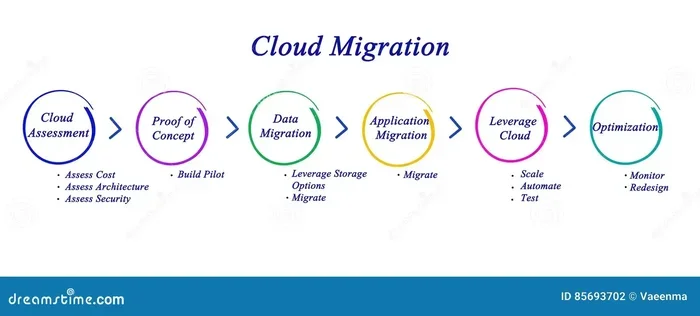
Before you move anything, you need to understand what you currently have. Conduct a thorough cloud readiness assessment of your existing systems. Identify which applications are critical, which are outdated, and which can be retired.
Map out all your workload migration requirements. Consider factors like data size, application dependencies, and compliance needs. This assessment gives you a clear picture of where you stand and what needs to change.
Step 2: Define Your Goals
What do you want to achieve with cloud migration? Your goals will shape your entire strategy. Some common objectives include:
- Reducing IT costs by 30% or more
- Improving application performance and uptime
- Enhancing security and compliance
- Enabling remote work and global collaboration
- Supporting future growth and innovation
Write down your goals and prioritize them. This clarity will guide every decision you make during the migration.
Step 3: Choose Your Migration Tools
There are many migration tools available to simplify the process. Cloud providers like AWS, Microsoft Azure, and Google Cloud offer their own suites of tools. Third-party options include CloudEndure, Carbonite, and Zerto.
These tools help with data transfer, application deployment, and monitoring. Choose tools that align with your chosen cloud migration strategy and your team’s technical skills.
Step 4: Build a Migration Team
Migrating to the cloud is a team effort. Assign clear roles and responsibilities to your team members. Include people from IT, security, operations, and business units. A cross-functional team ensures that all perspectives are considered.
Consider bringing in external experts if your team lacks cloud migration experience. Many consulting firms specialize in helping businesses navigate this transition smoothly.
Best Practices for a Smooth Cloud Migration
Following proven best practices can make or break your cloud migration project. Here are the tips that experts swear by.
Start Small and Scale Up
Do not try to migrate everything at once. Start with a low-risk workload as a pilot project. This lets your team learn, adjust, and build confidence before tackling more complex systems.
Once the pilot succeeds, you can expand to larger and more critical workloads. This phased approach reduces risk and gives you quick wins along the way.
Prioritize Security from Day One
Cloud security must be a top priority throughout the migration process. Implement strong access controls, encryption, and monitoring from the start. Do not wait until after migration to address security concerns.
Review your cloud migration security plan regularly. Threats evolve, and your defenses need to keep up. A proactive security stance protects your data and builds trust with your customers.
Focus on Cost Optimization
One of the biggest benefits of the cloud is cost savings. But without proper management, cloud costs can spiral out of control. Use cost optimization tools to track spending and identify waste.
Set up alerts for unusual spending patterns. Review your bills monthly and adjust your resource usage accordingly. Smart cost management keeps your cloud migration financially sustainable.
Test Thoroughly Before Going Live
Thorough testing is non-negotiable. Test every application, database, and integration before cutting over to the cloud. Run performance tests, security scans, and user acceptance tests.
Create a rollback plan in case something goes wrong. Knowing that you can revert to your previous setup gives you peace of mind and reduces the pressure of the final cutover.
Train Your Team
Your team needs to be comfortable working in the cloud environment. Invest in training programs that cover cloud basics, DevOps practices, and your specific cloud provider’s tools.
Well-trained teams make fewer mistakes and resolve issues faster. Training is an investment that pays off throughout your entire cloud migration journey and beyond.
Common Cloud Migration Challenges and How to Overcome Them
Every cloud migration project faces challenges. Being prepared for them makes all the difference. Here are the most common obstacles and how to handle them.
Challenge 1: Downtime During Migration
Downtime can hurt your business and frustrate users. To minimize it, schedule migrations during off-peak hours. Use migration tools that support zero-downtime cutover whenever possible.
Plan your cutover carefully and communicate with stakeholders in advance. A well-timed migration reduces the impact on your business operations.
Challenge 2: Data Loss or Corruption
Data integrity is critical during any workload migration. Always back up your data before moving it. Use verified transfer methods and validate data after migration.
Implement checksums and integrity checks throughout the process. These safeguards ensure that your data arrives in the cloud exactly as it was.
Challenge 3: Skill Gaps in Your Team
Not every team member will be an expert in cloud technologies. Identify skill gaps early and address them through training or hiring. Partnering with experienced consultants can also bridge the gap.
Challenge 4: Vendor Lock-In
Relying too heavily on a single cloud provider can create problems. To avoid vendor lock-in, use open standards and portable tools where possible. A multi-cloud strategy can also provide a safety net.
Comparing Cloud Migration Approaches
Choosing the right approach depends on your specific needs. Here is a comparison of the main cloud migration strategies to help you decide.
| Strategy | Speed | Cost | Optimization | Best For |
|---|---|---|---|---|
| Lift and Shift | Fast | Low | Minimal | Quick migrations, legacy apps |
| Re-platforming | Moderate | Medium | Moderate | Balanced improvement |
| Re-architecting | Slow | High | Maximum | Long-term transformation |
| Hybrid Cloud | Variable | Medium | Good | Sensitive data, legacy systems |
| Multi-Cloud | Variable | Medium-High | Good | Redundancy, vendor flexibility |
Each approach has its strengths. The best choice aligns with your goals, budget, and timeline. Many organizations use a combination of strategies for different workloads. This blended approach gives you the flexibility to optimize each migration individually.
Key Takeaways
- Cloud migration is a strategic move that transforms how your business operates.
- Multiple approaches exist: From simple lift and shift to full re-architecting, there is a strategy for every need.
- Planning is the foundation: A detailed roadmap prevents costly mistakes and keeps your project on track.
- Security and cost optimization must be priorities from the very beginning.
- Challenges are manageable: With the right preparation and team, you can overcome any obstacle.
- There is no single best approach: The right strategy depends on your unique business requirements.
Conclusion
Cloud migration is one of the most impactful decisions a business can make today. Whether you choose a simple lift and shift or a full cloud-native re-architecting, the key is to plan carefully and execute thoughtfully. The approaches we have covered in this guide give you a strong foundation to build on.
Remember that cloud migration is not a one-time event. It is an ongoing journey of optimization and improvement. Stay proactive about security, cost management, and team training. With the right strategy in place, your cloud migration can unlock new levels of efficiency, agility, and growth.
Start small, learn as you go, and do not be afraid to adjust your plan along the way. The cloud is a powerful tool, and with the right approach, it can take your business to new heights.
Frequently Asked Questions
What is the fastest cloud migration approach?
The lift and shift method is the fastest way to migrate to the cloud. It involves moving your existing applications and data to the cloud with minimal changes. However, speed comes at the cost of optimization, so consider your long-term goals before choosing this approach.
How long does a cloud migration typically take?
The timeline varies widely depending on the complexity of your workloads and the migration strategy you choose. A simple lift and shift project might take a few weeks, while a full re-architecting effort could take several months or even a year. Planning and preparation are key to staying on schedule.
Is cloud migration expensive?
The cost depends on the scale of your migration and the approach you use. Lift and shift tends to be more affordable upfront, while re-architecting requires a larger initial investment. However, the long-term savings from reduced infrastructure and maintenance often outweigh the upfront costs.
What is the difference between hybrid cloud and multi-cloud?
A hybrid cloud combines on-premises infrastructure with a single public cloud provider. A multi-cloud strategy uses services from multiple cloud providers simultaneously. Both approaches have their benefits, and the right choice depends on your business needs and technical requirements.
How do I ensure data security during cloud migration?
Start by implementing strong encryption for data in transit and at rest. Use role-based access controls and conduct regular security audits. Partnering with a trusted cloud provider that complies with industry standards also helps protect your data throughout the cloud migration process.
Can small businesses benefit from cloud migration?
Absolutely. Cloud migration is not just for large enterprises. Small businesses gain access to enterprise-grade infrastructure, scalability, and cost savings by moving to the cloud. Many cloud migration tools are designed to be user-friendly and affordable for organizations of all sizes.
=== META TITLE ===
Smart Approaches for Cloud Migration in Cloud Computing
=== URL SLUG ===
/smart-approaches-cloud-migration-cloud-computing