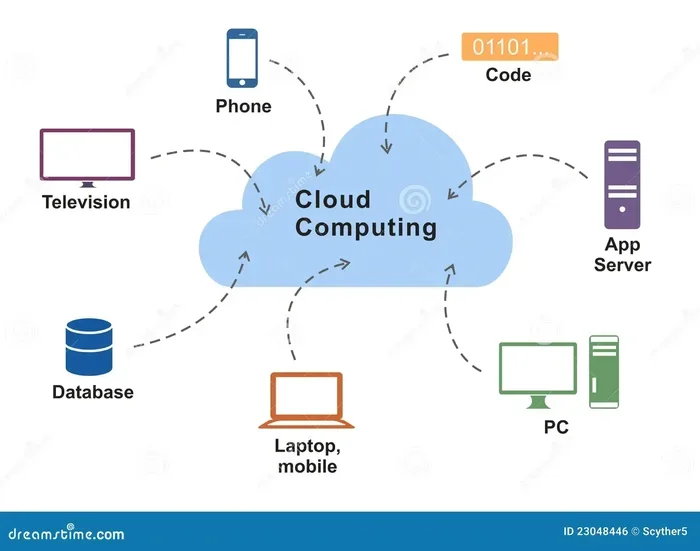
The Background of Cloud Computing and Why It Matters
The background of cloud computing traces back to the 1960s, when early visionaries imagined computing as a utility available to everyone. Today, cloud technology powers everything from streaming services to enterprise software, making it one of the most important innovations in modern IT. Understanding this evolution helps businesses and individuals make smarter decisions about cloud services and cloud infrastructure.
The background of cloud computing is a fascinating journey that spans over six decades. What started as a theoretical idea has grown into one of the most powerful forces in the technology world. Today, millions of businesses and individuals rely on cloud technology every single day. This article explores where it all began, how it evolved, and why it continues to matter so much in our digital lives.
Understanding the history of cloud computing gives you a clearer picture of where the technology is headed. Whether you are a business owner, a student, or simply a curious tech user, this guide covers the essential background you need. Let us walk through the story of how cloud services changed the world.
Key Takeaways
- Early Roots: The background of cloud computing started in the 1960s with time-sharing and virtualization concepts.
- Three Service Models: IaaS, PaaS, and SaaS form the backbone of modern cloud offerings.
- Massive Growth: Global cloud spending now exceeds hundreds of billions of dollars every year.
- Everyday Use: Most people already use cloud services daily without realizing it.
- Future Trends: Edge computing, hybrid cloud, and AI integration are shaping the next phase.
- Business Value: Cloud adoption delivers scalability, cost savings, and better remote collaboration.
- Security Matters: Understanding cloud security is essential as adoption grows.
📑 Table of Contents
- What Cloud Computing Really Means
- The History and Evolution of Cloud Technology
- How Cloud Services Work: IaaS, PaaS, and SaaS
- Key Benefits Driving Cloud Adoption
- Cloud Computing in Everyday Life
- The Future of Cloud Technology
- Common Mistakes to Avoid with Cloud Computing
- Expert Insights on Cloud Computing
- Conclusion
What Cloud Computing Really Means
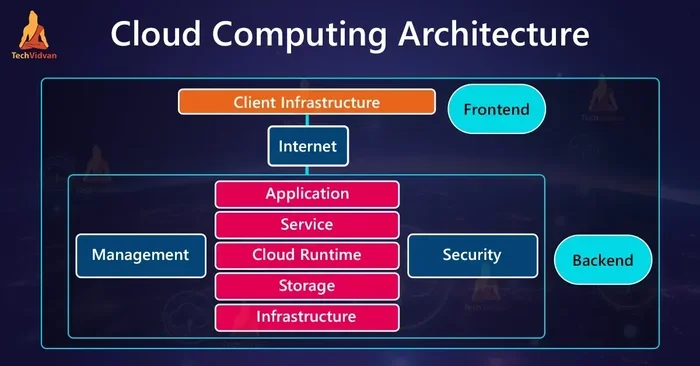
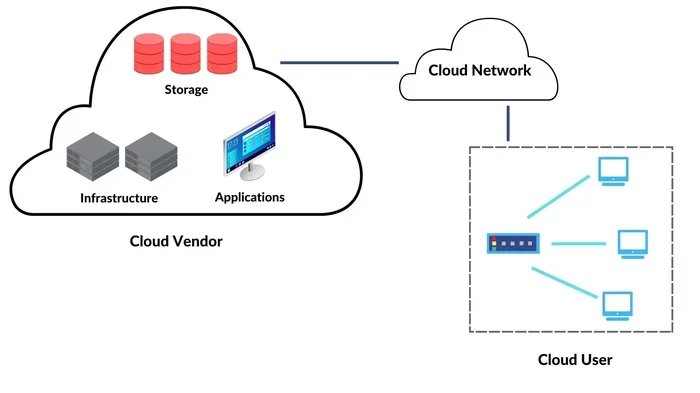
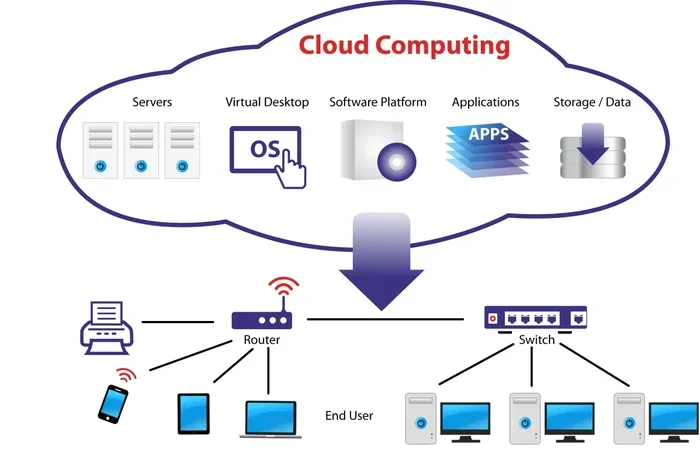
Before diving into the past, let us clarify what cloud computing actually means today. At its core, cloud computing refers to delivering computing resources over the internet. Instead of storing files or running programs on your own device, you access them through remote data centers.
Think of it like electricity. You do not need to build a power plant in your home. You simply plug in and use what you need. Cloud infrastructure works the same way. You rent storage, processing power, or software on demand and pay only for what you use.
This model is called on-demand computing. It replaced the old way of buying expensive servers and maintaining them in-house. The shift from local hardware to remote distributed computing is what makes cloud technology so powerful and flexible.
Key Concepts Behind Cloud Computing
Several foundational ideas make cloud computing possible:
- Virtualization: This technology creates virtual versions of servers, storage, and networks. It allows one physical machine to run multiple virtual environments.
- Scalability: Cloud resources can grow or shrink based on demand. Need more storage during a busy season? Just scale up.
- Multi-Tenancy: Multiple users share the same physical infrastructure while keeping their data separate and secure.
- Broad Network Access: You can access cloud services from any device with an internet connection.
These concepts form the foundation of everything we call cloud technology today. Without them, the modern cloud computing revolution would not exist.
The History and Evolution of Cloud Technology
The background of cloud computing goes back much further than most people realize. The seeds were planted in the 1960s, long before the internet became mainstream. Understanding this timeline helps you appreciate how far the technology has come.
The 1960s: Time-Sharing and Early Vision
In the 1960s, computers were enormous and extremely expensive. Only large organizations could afford them. A man named J.C.R. Licklider envisioned a world where computers could be connected and shared. His idea was called the “Intergalactic Computer Network.”
Around the same time, another concept called time-sharing emerged. Time-sharing allowed multiple users to access a single mainframe computer simultaneously. Each user got a small slice of computing time. This was the first real step toward shared computing resources.
The 1970s and 1980s: Virtualization Takes Shape
By the 1970s, computer scientists started experimenting with virtual machines. Virtualization let one physical computer act like several separate machines. This was a huge breakthrough because it made better use of expensive hardware.
In the 1980s, personal computers became more common. Many companies moved away from shared mainframes. But the idea of sharing resources over a network never disappeared. Researchers continued working on network computing and early forms of remote server access.
The 1990s: The Internet Changes Everything
The rise of the internet in the 1990s opened the door for modern cloud computing. Companies began offering Application Service Providers (ASPs), which hosted software applications on remote servers. Users accessed these applications through their web browsers.
Salesforce, founded in 1999, is often credited as one of the first successful SaaS (Software as a Service) companies. Instead of installing software on every computer, businesses could simply log in online. This was a game-changer for how people thought about software delivery.
The 2000s: The Cloud Boom
The early 2000s marked the real beginning of the cloud computing era. Amazon Web Services (AWS) launched in 2006, offering cloud storage and computing power to businesses of all sizes. Soon after, Google launched Google Apps, and Microsoft started building its own cloud platform.
Other major players like IBM, Oracle, and Rackspace entered the market. The term “cloud computing” became mainstream. Businesses realized they no longer needed massive IT infrastructure on-site. They could outsource their computing needs to powerful cloud data centers.
The 2010s to Today: Cloud Becomes Essential
By the 2010s, cloud adoption exploded. Companies of every size moved their operations to the cloud. The COVID-19 pandemic in 2020 accelerated this shift even further. Remote work became the norm, and cloud-based collaboration tools became essential for staying productive.
Today, the global cloud services market is worth over $500 billion. Cloud migration is no longer a trend. It is a standard business practice. The background of cloud computing has led us to a world where almost everything runs on remote servers.
How Cloud Services Work: IaaS, PaaS, and SaaS
Understanding the three main cloud service models is key to grasping how cloud computing works in practice. Each model serves a different purpose and offers different levels of control.
Infrastructure as a Service (IaaS)
IaaS provides the most basic level of cloud computing. It gives you virtualized computing resources over the internet. This includes virtual machines, storage, and networking.
With IaaS, you manage your own operating systems and applications. The cloud provider handles the physical hardware. Popular IaaS providers include AWS, Microsoft Azure, and Google Cloud Platform.
Example: A startup rents virtual servers from AWS to host its website. The company does not buy any physical hardware. It simply pays for the resources it uses each month.
Platform as a Service (PaaS)
PaaS goes a step further. It provides a platform for developers to build, test, and deploy applications without worrying about the underlying infrastructure.
Developers focus on writing code. The PaaS provider manages servers, storage, and networking. This makes it faster and easier to build software.
Example: A team of developers uses Heroku to build a new mobile app. They do not need to set up servers or manage databases. Heroku handles all of that behind the scenes.
Software as a Service (SaaS)
SaaS delivers fully functional software applications over the internet. Users access these applications through a web browser. There is no need to install anything on their local devices.
The provider manages everything. Users simply log in and use the software. This is the most common form of cloud computing for everyday users.
Example: Google Workspace, Microsoft 365, and Dropbox are all SaaS products. Millions of people use them daily without thinking about the cloud computing architecture behind them.
Comparison of Cloud Service Models
| Feature | IaaS | PaaS | SaaS |
|---|---|---|---|
| User Control | High | Medium | Low |
| Management Burden | User manages OS and apps | Provider manages infrastructure | Provider manages everything |
| Target Users | IT teams and sysadmins | Developers | End users and businesses |
| Examples | AWS EC2, Azure VMs | Heroku, Google App Engine | Gmail, Salesforce, Dropbox |
Each model has its strengths. The right choice depends on your needs, technical skills, and budget. Most businesses use a combination of all three models to get the best results from their cloud technology setup.
Key Benefits Driving Cloud Adoption
The background of cloud computing is not just a story of technology. It is also a story of real-world benefits. Companies across every industry have adopted cloud services because they deliver measurable value.
Cost Savings
One of the biggest advantages of cloud computing is cost reduction. Traditional IT requires large upfront investments in hardware, software, and maintenance. With the cloud, you pay a monthly fee and avoid capital expenses.
Small businesses especially benefit from this model. They can access enterprise-grade cloud infrastructure without spending millions. This levels the playing field and allows startups to compete with larger companies.
Scalability and Flexibility
Cloud scalability allows businesses to adjust their resources based on demand. During peak seasons, a company can add more computing power instantly. When demand drops, it scales back down.
This flexibility is impossible with traditional on-premise setups. Buying and installing new servers takes weeks or months. With cloud computing, it takes just a few clicks.
Remote Work and Collaboration
The rise of remote work has made cloud-based collaboration essential. Teams can access shared files, communicate in real time, and work on projects from anywhere in the world.
Tools like Slack, Zoom, and Microsoft Teams all run on cloud infrastructure. They have transformed how teams work together and made remote productivity a reality.
Disaster Recovery and Reliability
Cloud providers invest heavily in data redundancy and backup systems. Your data is stored in multiple locations, so it stays safe even if one server fails.
This level of reliability is expensive to replicate with on-premise systems. For most businesses, the cloud offers a much more practical and affordable disaster recovery solution.
Cloud Computing in Everyday Life
You might think cloud computing is only for big businesses. But the truth is, you already use it every day. The background of cloud computing has touched nearly every part of modern life.
When you stream a movie on Netflix, you are using cloud storage and content delivery networks. When you take a photo on your phone and it appears on your laptop, that is cloud syncing at work. When you send an email or use Google Docs, you are relying on cloud services.
Even smart home devices like Alexa and Google Home depend on cloud computing to process your voice commands. The technology has become so integrated into daily life that most people do not even notice it.
This invisible presence is one of the greatest achievements of the cloud computing revolution. It has made powerful technology accessible to everyone, not just tech experts or large corporations.
The Future of Cloud Technology
The background of cloud computing tells us where we have been. But what about where we are going? The future of cloud technology is full of exciting possibilities.
Edge Computing
Edge computing brings processing power closer to the user. Instead of sending data to a distant data center, edge devices handle tasks locally. This reduces latency and improves performance.
Edge computing is especially important for Internet of Things (IoT) devices. Self-driving cars, smart factories, and wearable health devices all benefit from faster, more local processing.
Hybrid and Multi-Cloud Strategies
Many businesses now use a hybrid cloud approach. They keep some workloads on private servers and move others to the public cloud. This gives them the best of both worlds: control and flexibility.
A multi-cloud strategy takes this further. Companies use services from multiple cloud providers to avoid vendor lock-in and optimize costs. This trend is growing as cloud adoption continues to expand.
Artificial Intelligence and Cloud
AI and cloud computing are a powerful combination. Cloud providers offer AI tools and machine learning services that make advanced technology accessible to everyone. You do not need a team of data scientists to use AI anymore.
From chatbots to image recognition, AI-powered cloud services are transforming industries like healthcare, finance, and retail. This trend will only accelerate in the coming years.
Serverless Computing
Serverless computing is an emerging model where the cloud provider manages all the infrastructure. Developers simply write code, and the cloud platform runs it automatically. This removes the need to manage servers entirely.
Services like AWS Lambda and Google Cloud Functions are leading the way. Serverless computing is perfect for event-driven applications and microservices architecture.
Common Mistakes to Avoid with Cloud Computing
While cloud technology offers incredible benefits, there are pitfalls to watch out for. Here are some common mistakes businesses make when adopting cloud services:
- Ignoring security: Cloud providers handle infrastructure security, but you are responsible for securing your data and access controls.
- Underestimating costs: Without proper monitoring, cloud bills can spiral out of control. Always set budgets and alerts.
- Choosing the wrong provider: Not all cloud platforms are the same. Evaluate your needs carefully before committing.
- Neglecting training: Your team needs to understand how to use cloud tools effectively. Invest in training and onboarding.
- Skipping the migration plan: Moving to the cloud requires careful planning. Rushing the process can lead to data loss and downtime.
Avoiding these mistakes will help you get the most out of your cloud infrastructure investment. Take your time, plan carefully, and choose the right partners.
Expert Insights on Cloud Computing
Industry experts agree that cloud computing is not a passing trend. It is the foundation of modern technology. According to recent reports, over 90% of organizations now use some form of cloud services.
“The cloud is not just a technology. It is a business strategy,” says a leading analyst from Gartner. Companies that embrace cloud migration early gain a competitive advantage. They move faster, innovate more, and respond to market changes with ease.
Another expert from Forbes notes that cloud security has improved dramatically. Early concerns about data privacy and breaches have largely been addressed. Modern cloud platforms offer advanced encryption, identity management, and compliance tools.
The key takeaway is clear: the background of cloud computing shows us that this technology is here to stay. Businesses that invest in cloud technology today will be better positioned for tomorrow.
Conclusion
The background of cloud computing is a story of vision, innovation, and transformation. From early time-sharing experiments in the 1960s to the multi-billion-dollar cloud services market of today, this technology has come a long way.
We have explored how cloud computing works, the three main service models, and the real-world benefits it delivers. We have also looked at how it touches our everyday lives and what the future holds.
The cloud computing revolution is not slowing down. New advances in edge computing, AI, and serverless architecture will continue to push the boundaries of what is possible. Whether you are a business leader, a developer, or a curious learner, understanding the background of cloud computing gives you a valuable edge.
Now is the perfect time to explore cloud services and see how they can work for you. The cloud has already changed the world. The next chapter is being written right now.
Frequently Asked Questions
What is the background of cloud computing?
The background of cloud computing dates back to the 1960s, when early computer scientists imagined shared computing resources over a network. Concepts like time-sharing and virtualization laid the groundwork. The internet boom in the 1990s and early 2000s brought cloud computing into the mainstream.
How does cloud computing work?
Cloud computing delivers computing resources like storage, processing power, and software over the internet. Instead of using local servers, users access these resources through remote data centers. The cloud provider manages the hardware, and users pay for what they use.
What are the three main types of cloud services?
The three main cloud service models are IaaS (Infrastructure as a Service), PaaS (Platform as a Service), and SaaS (Software as a Service). IaaS provides virtualized infrastructure. PaaS offers a development platform. SaaS delivers ready-to-use software applications over the internet.
Why is cloud computing important for businesses?
Cloud technology helps businesses reduce costs, scale quickly, and collaborate remotely. It eliminates the need for expensive on-premise hardware. Companies can access enterprise-grade cloud infrastructure without large upfront investments. This makes it especially valuable for startups and small businesses.
Is cloud computing secure?
Yes, modern cloud platforms invest heavily in security. They use advanced encryption, multi-factor authentication, and regular audits. However, security is a shared responsibility. Providers secure the infrastructure, while users must protect their own data and access controls.
What does the future of cloud computing look like?
The future of cloud computing includes edge computing, AI integration, and serverless architecture. Hybrid and multi-cloud strategies are becoming more popular. As cloud adoption grows, we can expect even more innovative cloud services that make technology more accessible and powerful for everyone.