How Cloud Computing Transforms the Automotive Industry
Cloud computing in the automotive industry is reshaping how cars are built, driven, and maintained. From over-the-air updates to real-time vehicle monitoring, the cloud is the backbone of modern smart mobility. This article breaks down the key benefits, use cases, and challenges that make cloud-based automotive solutions a game-changer for automakers and drivers alike.
The automotive world is changing fast. Cars are no longer just machines with engines and wheels. Today, vehicles are smart, connected, and packed with software. And behind all of that intelligence is cloud computing in the automotive industry.
From Tesla sending updates to your car overnight to fleet managers tracking thousands of trucks in real time, the cloud is doing the heavy lifting. It is no longer a nice-to-have. It is a must-have for automakers who want to stay competitive. In this article, we will explore how cloud-based automotive solutions are transforming every part of the car industry.
Whether you are a car enthusiast, a tech professional, or just curious about what is under the hood of modern vehicles, this guide has something for you. Let us dive in.
Key Takeaways
- Real-Time Data Processing: Cloud computing enables automakers to process massive amounts of vehicle data instantly, improving safety and performance.
- Over-the-Air Updates: Cars receive software updates remotely, reducing dealership visits and keeping vehicles current.
- Autonomous Driving Support: Cloud platforms provide the computing power needed for self-driving car algorithms and AI decision-making.
- Fleet Management Made Easy: Businesses use automotive cloud platforms to track vehicles, optimize routes, and cut costs.
- Predictive Maintenance: Cloud-based analytics help predict car problems before they happen, saving time and money.
- Connected Vehicle Ecosystem: The cloud connects cars, drivers, and infrastructure into one smart network.
📑 Table of Contents
- What Is Cloud Computing in the Automotive Industry?
- Key Benefits of Cloud Computing for Automakers
- How Cloud Computing Powers Connected Cars
- Cloud Computing and Autonomous Vehicles
- Real-World Use Cases and Applications
- Challenges and Considerations
- The Future of Cloud Computing in the Automotive Industry
What Is Cloud Computing in the Automotive Industry?
At its core, cloud computing automotive means using remote servers hosted on the internet to store, process, and manage vehicle data. Instead of relying solely on a car’s built-in computer, vehicles can tap into powerful cloud servers for heavy lifting.
This shift has opened up a world of possibilities. Automakers now build automotive cloud platforms that handle everything from navigation to entertainment to safety features. The result? Smarter cars that learn and adapt over time.
How It Works in Practice
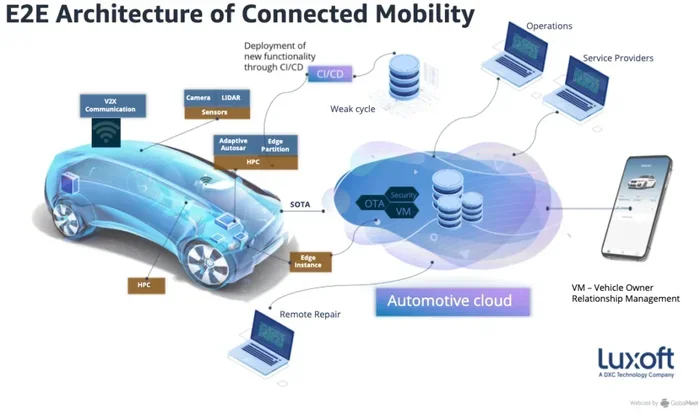
Here is a simple way to think about it. Your car collects data from sensors, cameras, and GPS systems. That data gets sent to the cloud. The cloud processes it and sends back useful insights. All of this happens in seconds.
For example, if your car detects a potential engine problem, the cloud can analyze the data and alert you before the issue becomes serious. This is the power of vehicle data analytics running on cloud infrastructure.
Key Benefits of Cloud Computing for Automakers
The move to the cloud is not just a tech trend. It delivers real, measurable benefits for car companies and their customers. Let us look at the biggest advantages.
Faster Software Development
Cloud computing gives automakers access to powerful tools for automotive software development. Engineers can build, test, and deploy new features faster than ever before. This speed matters in a market where consumers expect constant innovation.
With cloud-native automotive applications, teams can collaborate from anywhere in the world. A developer in Germany can work on the same codebase as someone in Japan. This global reach accelerates the entire product cycle.
Cost Savings at Scale
Running your own servers is expensive. Cloud computing lets automakers pay only for the resources they use. This is especially helpful for automotive cloud services that handle fluctuating workloads, like processing data from millions of connected cars.
Smaller car companies also benefit. They do not need to invest millions in physical infrastructure. The cloud levels the playing field.
Improved Customer Experience
Cloud-powered features make driving more enjoyable. Think about in-car entertainment, voice assistants, and smart navigation. All of these rely on the cloud to deliver fresh content and real-time information.
When your car can download new features overnight, it feels like getting a new vehicle without leaving your driveway. This is the magic of over-the-air updates, made possible by cloud computing.
How Cloud Computing Powers Connected Cars
The concept of the connected vehicle ecosystem is one of the most exciting outcomes of cloud computing in the automotive industry. A connected car is not just a car with Wi-Fi. It is a rolling computer that communicates with the cloud, other vehicles, and even city infrastructure.
Vehicle Telematics and Real-Time Monitoring
Vehicle telematics is the technology that sends data from your car to the cloud and back. This includes speed, location, fuel levels, engine health, and driving behavior. Automakers use this data to improve safety, plan maintenance, and offer personalized services.
For drivers, telematics means real-time alerts about traffic, weather, and road conditions. It also enables features like remote start, lock, and unlock through a smartphone app.
Smart Mobility and Traffic Management
Cloud computing plays a big role in smart mobility initiatives. Cities use data from connected vehicles to manage traffic flow, reduce congestion, and improve air quality. The cloud acts as the central hub where all this data comes together.
Imagine a city where traffic lights adjust in real time based on the number of cars approaching. That is not science fiction. It is happening now, thanks to automotive IoT and cloud platforms.
The Role of Edge Computing
While the cloud handles heavy processing, edge computing automotive brings some computation closer to the vehicle. This reduces latency and improves response times for safety-critical features like automatic emergency braking.
Edge computing and the cloud work together. The edge handles immediate decisions, while the cloud handles long-term learning and data storage. This combination makes connected cars faster and smarter.
Cloud Computing and Autonomous Vehicles
Self-driving cars are perhaps the most ambitious application of cloud computing automotive. Autonomous vehicles generate enormous amounts of data every second. Cameras, lidar sensors, and radar systems all produce information that needs to be processed quickly.
Training AI Models in the Cloud
Autonomous driving relies on artificial intelligence. Training these AI models requires massive computing power. Cloud servers provide exactly that. Automakers use the cloud to process millions of miles of driving data and teach their self-driving systems how to respond to different scenarios.
Without the cloud, training a single autonomous vehicle model could take months. With cloud-based vehicle data analytics, it can happen in days.
Fleet Learning and Continuous Improvement
When one autonomous car learns something new, the cloud can share that knowledge with the entire fleet. This is called fleet learning. Every car on the road becomes a little smarter because of what the others have experienced.
This collaborative approach is only possible with robust automotive cloud infrastructure. It is a great example of how the cloud creates value beyond what any single vehicle could achieve alone.
Real-World Use Cases and Applications
Theoretical benefits are great, but real-world examples show the true impact of cloud computing in the automotive industry. Let us look at some practical applications.
Use Case 1: Predictive Maintenance
Traditional car maintenance follows a fixed schedule. You change your oil every 5,000 miles or replace brakes every 30,000 miles. But with cloud-based predictive maintenance, your car tells you exactly when a part needs attention based on actual usage data.
This approach saves money and prevents unexpected breakdowns. It is a clear win for both drivers and repair shops.
Use Case 2: Fleet Management
Companies that operate large fleets of vehicles depend on fleet management tools powered by the cloud. These tools track vehicle locations, monitor driver behavior, optimize delivery routes, and schedule maintenance automatically.
Cloud-based fleet management reduces fuel costs, improves delivery times, and extends the life of vehicles. It is one of the most popular applications of automotive cloud platforms today.
Use Case 3: In-Car Entertainment and Infotainment
Modern cars offer streaming music, video calls, and app stores. None of this would work without the cloud. Automotive cloud services deliver content to your car in real time, keeping passengers entertained and informed during every trip.
Companies like BMW, Mercedes-Benz, and GM have built cloud-connected infotainment systems that receive regular updates with new features and content.
Use Case 4: Insurance and Usage-Based Pricing
Insurance companies now use data from connected cars to set premiums based on actual driving behavior. Safe drivers pay less. The cloud makes this possible by securely collecting and analyzing driving data.
This model, known as telematics insurance, is growing fast. It rewards good driving habits and gives consumers more control over their insurance costs.
Challenges and Considerations
Despite its many benefits, cloud computing automotive is not without challenges. Automakers must address several important issues to make the most of cloud technology.
Data Privacy and Security
Connected cars collect vast amounts of personal data. Location history, driving habits, and even cabin conversations can be recorded and transmitted to the cloud. Protecting this data is critical.
Automakers must invest in strong encryption, secure authentication, and transparent privacy policies. A single data breach can damage a brand’s reputation and erode customer trust.
Connectivity Dependence
Cloud-powered features require a stable internet connection. In rural areas or during network outages, some features may not work. Automakers must design systems that can function offline when needed.
Edge computing automotive helps address this by keeping essential functions local to the vehicle, even when the cloud is unreachable.
Integration Complexity
Integrating cloud platforms with existing vehicle systems is complex. Automakers must ensure that new cloud-native automotive applications work seamlessly with legacy hardware and software.
This requires careful planning, robust testing, and ongoing maintenance. The integration process can be costly and time-consuming, but the long-term benefits are worth the effort.
Regulatory Compliance
Different countries have different rules about data storage, processing, and sharing. Automakers must navigate a complex landscape of regulations when deploying automotive cloud platforms globally.
Staying compliant is not optional. It is a legal requirement that affects every aspect of cloud-based automotive solutions.
The Future of Cloud Computing in the Automotive Industry
The road ahead looks bright for cloud computing automotive. As technology advances, we can expect even deeper integration between the cloud and our vehicles.
5G networks will supercharge connected car capabilities. Faster data transfer means quicker responses and richer experiences. Digital transformation automotive will accelerate as more automakers embrace cloud-first strategies.
We will also see more collaboration between automakers and tech companies. The lines between car manufacturers and software companies will continue to blur. The vehicles of tomorrow will be defined not by their engines, but by their software and cloud connectivity.
Cloud computing in the automotive industry is not a passing trend. It is the foundation of the next generation of transportation. Automakers who invest in this technology today will lead the industry for decades to come.
For consumers, the takeaway is simple. The cars you drive will keep getting smarter, safer, and more connected. And the cloud will be the engine behind that transformation.
Frequently Asked Questions
What is cloud computing in the automotive industry?
Cloud computing automotive refers to using remote internet-based servers to store, process, and manage data from connected vehicles. It enables features like over-the-air updates, real-time vehicle monitoring, and smart mobility services that modern cars depend on.
How does cloud computing improve connected cars?
The cloud processes massive amounts of data from vehicle sensors and sends back real-time insights. This powers navigation, entertainment, predictive maintenance, and safety features. Without the cloud, connected cars would not be able to deliver the smart experiences drivers expect today.
Can cloud computing help with autonomous vehicles?
Yes. Cloud platforms provide the computing power needed to train AI models for self-driving cars. They also enable fleet learning, where one autonomous vehicle shares knowledge with others. This makes autonomous driving systems smarter and safer over time.
What are the main challenges of cloud computing in automotive?
The biggest challenges include data privacy and security, connectivity dependence, integration complexity, and regulatory compliance. Automakers must address these issues carefully to ensure that cloud-based automotive solutions are safe, reliable, and trustworthy for consumers.
How does cloud computing benefit fleet management?
Cloud-based fleet management tools track vehicle locations, monitor driver behavior, optimize routes, and schedule maintenance automatically. This reduces fuel costs, improves efficiency, and extends vehicle lifespan. It is one of the most widely adopted applications of automotive cloud platforms.
What is the future of cloud computing in the automotive sector?
The future looks very promising. With 5G networks, faster data processing, and deeper AI integration, cloud-powered cars will become even smarter. Digital transformation automotive will continue to accelerate, making cloud connectivity a standard feature in vehicles of the future.
=== CONCLUSION ===
Cloud computing in the automotive industry is no longer a futuristic concept. It is happening right now, in every connected car on the road. From powering autonomous vehicles to enabling over-the-air updates, the cloud is the invisible force that makes modern driving smarter and safer.
The benefits are clear. Automakers save money, develop software faster, and deliver better experiences to customers. Drivers enjoy smarter features, fewer breakdowns, and more personalized services. The entire connected vehicle ecosystem becomes stronger and more efficient with every cloud-powered innovation.
As we look ahead, the role of the cloud in automotive will only grow. Edge computing, AI, and 5G will open new doors that we can barely imagine today. One thing is certain: the cars of the future will be defined by their software, and the cloud will be the engine that drives it all.
If you are an automaker, a developer, or simply someone who loves cars, now is the time to pay attention. Cloud-based automotive solutions are shaping the future of transportation. Understanding this technology today will help you stay ahead of the curve tomorrow.