Five Essential Characteristics of Cloud Computing Explained
The five essential characteristics of cloud computing define how modern cloud services deliver value to businesses and individuals. These traits — on-demand self-service, broad network access, resource pooling, rapid elasticity, and measured service — are the foundation of every cloud platform. Understanding them helps you make smarter decisions about cloud deployment and IT infrastructure.
Cloud computing has transformed the way businesses and individuals use technology. Instead of buying expensive servers and maintaining them in-house, organizations now rent computing power over the internet. This shift has made technology more accessible, affordable, and flexible than ever before.
But what exactly makes cloud computing different from traditional IT? The answer lies in five essential characteristics of cloud computing. These traits were defined by the National Institute of Standards and Technology (NIST) and form the backbone of every cloud platform. Whether you are a small business owner, a developer, or an IT decision-maker, understanding these characteristics is essential.
In this article, we will break down each of the five characteristics in detail. We will explore what they mean, why they matter, and how they impact your daily operations. By the end, you will have a clear picture of how cloud services work and why they have become the backbone of modern IT infrastructure.
Key Takeaways
- On-demand self-service lets users access resources without human intervention from the provider.
- Broad network access ensures cloud services are available anywhere through standard devices.
- Resource pooling allows multiple users to share the same physical infrastructure efficiently.
- Rapid elasticity enables quick scaling of resources up or down based on demand.
- Measured service provides transparent tracking and billing for resources consumed.
- These five characteristics come from the NIST definition and apply to all cloud computing models.
- Knowing these traits helps businesses choose the right cloud providers and avoid costly mistakes.
📑 Table of Contents
- What Are the Five Essential Characteristics of Cloud Computing?
- How These Characteristics Work Together
- Cloud Computing Models and How Characteristics Apply
- Common Mistakes When Understanding Cloud Characteristics
- Why These Characteristics Matter for Your Business
- Expert Insights on Cloud Characteristics
- Conclusion
What Are the Five Essential Characteristics of Cloud Computing?
The five essential characteristics of cloud computing come from a widely accepted definition created by NIST. These characteristics ensure that any service labeled as “cloud” meets a specific set of standards. Without them, a service is simply hosted infrastructure, not true cloud computing.
Let us look at each one in detail.
1. On-Demand Self-Service
The first of the five essential characteristics of cloud computing is on-demand self-service. This means users can access computing resources — such as cloud storage, processing power, or virtual machines — without needing to interact with a human provider. You simply log into a portal, select what you need, and the system provides it instantly.
Think of it like an automated vending machine. You do not need to talk to a clerk or fill out paperwork. You pick your item, pay, and receive it immediately. Cloud platforms work the same way.
For example, if your website suddenly experiences a traffic spike, you can spin up additional servers within minutes. No phone calls, no support tickets, no waiting. This automation is a game-changer for businesses that need to respond quickly to changing conditions.
Key benefits of on-demand self-service:
- Instant access to resources without delays
- Reduced dependency on IT staff for routine tasks
- Greater control and flexibility for users
- Faster deployment of applications and services
This characteristic is especially valuable for cloud migration projects. When moving from traditional IT infrastructure to the cloud, self-service capabilities reduce the learning curve and speed up adoption.
2. Broad Network Access
The second characteristic is broad network access. Cloud resources are available over the network and can be accessed through standard mechanisms. This means you can use a laptop, smartphone, tablet, or desktop to reach your cloud services from anywhere in the world.
There is no need for specialized hardware or software. As long as you have an internet connection, you can connect to your cloud services. This is what makes remote work possible and keeps businesses running even when teams are spread across different locations.
Why broad network access matters:
- Supports remote and hybrid work environments
- Enables collaboration across global teams
- Works with standard devices and platforms
- Reduces the need for specialized equipment
Imagine a sales team traveling to different cities. They can access customer data, update records, and collaborate with colleagues using nothing more than a phone and an internet connection. This level of accessibility is one of the biggest advantages of cloud computing models over traditional setups.
3. Resource Pooling
Resource pooling is the third characteristic. Cloud providers use a multi-tenant architecture to serve multiple customers from the same pool of physical resources. These resources include servers, storage, and networking equipment. The provider dynamically assigns and reassigns resources based on demand.
Think of it like a shared apartment building. Many people live in the same building, but each tenant has their own private space. Similarly, multiple businesses share the same physical cloud infrastructure, but their data and applications remain isolated and secure.
How resource pooling works in practice:
- Providers maintain large data centers with massive pools of hardware
- Resources are allocated dynamically to different customers
- Customers do not need to know the exact location of their resources
- Efficiency improves because resources are shared and utilized fully
This pooling model is what makes cloud computing so cost-effective. Instead of each business buying its own servers, they share the cost of the provider’s infrastructure. This is the core of the pay-as-you-go model that makes cloud services affordable for businesses of all sizes.
Expert Insight: Resource pooling is also what allows cloud providers to offer such competitive pricing. Because they serve thousands of customers from shared facilities, they can spread costs and pass savings on to you.
4. Rapid Elasticity
The fourth characteristic is rapid elasticity. This refers to the ability to scale resources up or out quickly and automatically based on demand. When traffic increases, more resources are provisioned. When traffic decreases, resources are released.
Elasticity is like having an elastic band. It stretches when you need it and snaps back when you do not. This flexibility is one of the most powerful features of cloud computing and a key reason businesses choose the cloud over on-premises solutions.
Real-world examples of rapid elasticity:
- An e-commerce site scaling up servers during a holiday sale
- A streaming service handling millions of viewers during a premiere
- A startup handling unexpected traffic after a viral social media post
- A business scaling down during off-peak seasons to save costs
Without elasticity, businesses would need to purchase enough servers to handle peak traffic — which means paying for idle capacity most of the time. With cloud scalability, you only use what you need, when you need it.
Quick Tip: When evaluating cloud providers, ask about their auto-scaling capabilities. Look for services that can scale within minutes, not hours or days. The faster the elasticity, the better your performance during traffic spikes.
5. Measured Service
The fifth and final characteristic is measured service. Cloud systems automatically control and optimize resource usage by leveraging a metering capability. This means every resource you consume is tracked, measured, and reported.
Measured service is what makes the pay-as-you-go model possible. You are billed for exactly what you use, much like your electricity or water bill. There are no upfront costs or long-term contracts required in most cases.
What measured service provides:
- Transparent billing based on actual usage
- Detailed reports on resource consumption
- Cost optimization through usage tracking
- Accountability for both the provider and the customer
This characteristic also supports service level agreements (SLAs). SLAs define the expected level of service, uptime guarantees, and performance metrics. Measured service ensures that both parties can verify whether the agreed-upon standards are being met.
For businesses, measured service is a powerful tool for budget planning. Because costs are directly tied to usage, it is easy to forecast expenses and avoid surprises at the end of the month.
How These Characteristics Work Together
While each of the five essential characteristics of cloud computing is important on its own, they truly shine when they work together. Let us look at how they interact in a real-world scenario.
Imagine you run an online education platform. During the semester, student traffic increases significantly. Here is how the five characteristics come into play:
- On-demand self-service allows your team to add more servers through the cloud portal instantly.
- Broad network access ensures students from any device and location can access courses without issues.
- Resource pooling means you share the provider’s infrastructure, keeping costs low.
- Rapid elasticity automatically scales resources during peak enrollment periods and scales them back when the semester ends.
- Measured service tracks every hour of server usage, so you only pay for what you consume.
Together, these characteristics create a powerful, flexible, and cost-efficient cloud deployment model. No single characteristic is enough on its own. It is the combination that makes cloud computing so valuable.
Cloud Computing Models and How Characteristics Apply
The five essential characteristics apply across all cloud computing models. However, the way they manifest can differ depending on the service and deployment model you choose.
Service Models
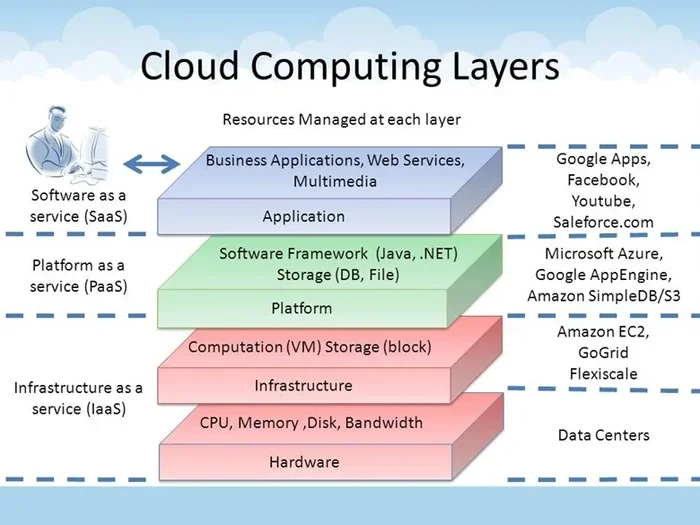
There are three primary service models in cloud computing:
- Infrastructure as a Service (IaaS) — Provides virtualized computing resources like servers and storage. Users have the most control.
- Platform as a Service (PaaS) — Provides a platform for developing, testing, and deploying applications without managing underlying infrastructure.
- Software as a Service (SaaS) — Provides fully managed applications accessed over the internet. Examples include email, CRM, and office tools.
In all three models, the five characteristics remain consistent. The difference lies in the level of control and management responsibility shared between the provider and the user.
Deployment Models
Cloud deployment models include:
- Public cloud — Resources are shared across multiple organizations. Highest efficiency and lowest cost.
- Private cloud — Resources are dedicated to a single organization. Greater control and security.
- Hybrid cloud — Combines public and private clouds for flexibility and optimization.
- Multi-cloud — Uses services from multiple cloud providers to avoid vendor lock-in and improve resilience.
Regardless of the deployment model, the five essential characteristics of cloud computing remain the defining features. A private cloud still offers on-demand self-service and measured service. A hybrid cloud still relies on broad network access and rapid elasticity.
Common Mistakes When Understanding Cloud Characteristics
Many businesses misunderstand what makes a service truly “cloud.” Here are some common mistakes to avoid:
- Assuming hosted equals cloud. Simply hosting your applications on a remote server does not make it cloud computing. The five characteristics must be present.
- Ignoring measured service. Without proper tracking, costs can spiral out of control. Always monitor your usage.
- Overlooking elasticity needs. If your provider cannot scale quickly, you may face performance issues during peak times.
- Neglecting security. While not one of the five characteristics, cloud security is a critical consideration that works alongside these traits.
- Choosing providers based on price alone. The cheapest option may not offer the best elasticity or measured service capabilities.
Common Mistake: Many businesses sign up for cloud services without fully understanding the billing model. Measured service means you pay for usage, but if you do not monitor it, unexpected charges can add up quickly.
Why These Characteristics Matter for Your Business
Understanding the five essential characteristics of cloud computing is not just academic. It has real, practical implications for your business.
First, these characteristics drive cost efficiency. By leveraging resource pooling, rapid elasticity, and measured service, businesses only pay for what they use. This eliminates the waste associated with traditional IT infrastructure.
Second, they enable agility and speed. On-demand self-service and rapid elasticity mean your team can respond to opportunities and challenges in minutes, not weeks. This speed advantage can be a significant competitive edge.
Third, they support global reach. Broad network access ensures your applications and services are available to users anywhere in the world, at any time, from any device.
Finally, these characteristics provide accountability and transparency. Measured service ensures you have full visibility into your usage and costs, enabling better decision-making and budget control.
Expert Insights on Cloud Characteristics
Industry experts consistently highlight the importance of these five characteristics. According to Gartner, organizations that fully understand and leverage these traits achieve 30% better cost efficiency compared to those that do not.
Experts also emphasize that the characteristics are not just technical features — they are business enablers. On-demand self-service empowers teams. Broad network access supports remote work. Resource pooling drives down costs. Rapid elasticity ensures performance. Measured service enables financial control.
Pro Tip: When evaluating a cloud provider, create a checklist based on these five characteristics. Ask specific questions about each trait and verify the answers with documentation and SLAs. This ensures you are getting true cloud services, not just repackaged hosting.
Conclusion
The five essential characteristics of cloud computing are more than just technical definitions. They are the foundation of everything that makes cloud services powerful, flexible, and cost-effective. From on-demand self-service to measured service, each characteristic plays a vital role in delivering the benefits that businesses rely on every day.
Whether you are migrating to the cloud for the first time or optimizing an existing cloud deployment, understanding these characteristics will help you make better decisions. You will choose the right cloud providers, avoid common pitfalls, and maximize your return on investment.
Take the time to evaluate how each characteristic applies to your specific needs. Ask questions, run tests, and monitor your results. The more you understand about these five traits, the better equipped you will be to harness the full power of cloud computing for your business.
Start applying this knowledge today. Your future self — and your bottom line — will thank you.
Frequently Asked Questions
What are the five essential characteristics of cloud computing?
The five essential characteristics are on-demand self-service, broad network access, resource pooling, rapid elasticity, and measured service. These were defined by NIST and form the foundation of all true cloud computing services.
Why are these characteristics important?
These characteristics ensure that cloud services deliver on their promise of flexibility, scalability, and cost efficiency. Without them, a service cannot be considered true cloud computing. They help businesses make informed decisions about their IT infrastructure and cloud migration strategies.
How does measured service benefit businesses?
Measured service provides transparent tracking and billing for resources consumed. This enables businesses to optimize costs, forecast expenses accurately, and hold cloud providers accountable through service level agreements.
Can a service be considered cloud if it lacks one of these characteristics?
No. According to the NIST definition, all five characteristics must be present for a service to be considered true cloud computing. Missing even one means the service is likely traditional hosting or a limited cloud offering.
How do these characteristics apply to hybrid cloud setups?
The five characteristics apply equally to hybrid cloud environments. A hybrid cloud combines public and private cloud resources, and all five traits — including rapid elasticity and resource pooling — work together across both environments to deliver consistent benefits.
What is the difference between rapid elasticity and scalability?
Scalability refers to the ability to handle growing workloads over time. Rapid elasticity goes further by enabling quick, automatic scaling up or down based on real-time demand. Elasticity is a dynamic feature that is one of the five essential characteristics of cloud computing.