Serverless Computing Falls Under What Cloud Service Category
Serverless computing falls under the Function as a Service (FaaS) category of cloud computing services. It is one of the three main cloud service models, alongside Infrastructure as a Service (IaaS) and Platform as a Service (PaaS). In serverless architecture, developers focus purely on writing code while the cloud provider handles all server management, scaling, and maintenance. This event-driven compute model lets you run backend functions without provisioning or managing servers. Understanding where serverless fits in the cloud computing landscape helps you choose the right services for your projects.
Serverless computing has transformed the way developers build and deploy applications. If you have ever wondered where serverless fits in the broader cloud computing landscape, you are not alone. Many people hear the term “serverless” and assume it means there are no servers involved at all. That is not quite accurate. In reality, serverless computing falls under a specific category of cloud computing services, and understanding that category unlocks a deeper understanding of modern cloud architecture.
This article breaks down exactly which cloud service category serverless belongs to. You will learn about the different types of cloud services, how FaaS works, and why serverless has become so popular. Whether you are a developer, a business owner, or someone curious about cloud technology, this guide covers everything you need to know.
Key Takeaways
- Serverless computing belongs to the FaaS category: It is classified as Function as a Service, a subcategory of cloud computing services.
- You don’t manage servers: The cloud provider handles provisioning, scaling, and maintenance automatically.
- It works on an event-driven model: Functions execute in response to triggers like HTTP requests or database changes.
- FaaS is one of three main cloud service types: Alongside IaaS and PaaS, FaaS completes the cloud computing service spectrum.
- Popular serverless platforms include AWS Lambda, Google Cloud Functions, and Azure Functions: These tools power modern serverless architectures.
- Serverless offers cost savings through pay-per-use billing: You only pay for the compute time your code actually consumes.
- Serverless computing enables faster development cycles: Teams can focus on writing code and building features instead of managing infrastructure.
📑 Table of Contents
- What Is Serverless Computing?
- Serverless Computing Falls Under Function as a Service (FaaS)
- The Three Main Cloud Service Categories
- Popular Serverless Computing Platforms
- Benefits of Serverless Computing
- Common Use Cases for Serverless Computing
- Common Mistakes to Avoid with Serverless Computing
- Expert Insights on Serverless Computing
- How Serverless Computing Fits Into the Cloud Ecosystem
- Final Thoughts
What Is Serverless Computing?
Serverless computing is a cloud execution model where the cloud provider dynamically manages the allocation and provisioning of servers. The term “serverless” can be misleading. Servers still exist. You simply do not have to think about them. The cloud provider takes care of all the backend infrastructure so you can focus on writing code.
In a traditional setup, you rent or buy servers. You install operating systems. You configure networking. You manage security patches. You scale resources up or down based on demand. This process takes time and requires specialized knowledge. Serverless computing removes all of that overhead.
Instead, you write small units of code called functions. These functions run in response to specific events. The cloud provider executes your function, manages the runtime environment, and scales resources automatically. You only pay for the actual compute time your code uses. This model is known as Function as a Service, or FaaS.
How Serverless Computing Works
Here is a simple way to understand the serverless execution model. Imagine you build an online store. When a customer places an order, a function triggers. That function processes the order details, sends a confirmation email, and updates the database. All of this happens automatically. No server needs to be running 24/7 waiting for orders to come in.
The cloud provider spins up the function when the event occurs. It runs the code. It shuts the function down when the task is complete. This approach is called event-driven computing. It is one of the core principles behind serverless architecture.
Serverless Computing Falls Under Function as a Service (FaaS)
Serverless computing falls under the Function as a Service category of cloud computing services. FaaS is one of the three primary cloud service models. It sits alongside Infrastructure as a Service (IaaS) and Platform as a Service (PaaS). Each model offers a different level of abstraction and control over cloud resources.
FaaS allows developers to execute code in response to events without managing the underlying infrastructure. The cloud provider handles everything from server provisioning to runtime management. This makes FaaS an ideal choice for building cloud-native applications that need to scale quickly and efficiently.
FaaS vs. Traditional Cloud Services
To understand FaaS better, it helps to compare it with other cloud service models. Each model gives you a different level of control and responsibility over the underlying infrastructure.
In Infrastructure as a Service (IaaS), you rent virtual machines, storage, and networking resources. You manage the operating system, middleware, and applications. IaaS gives you the most control but also the most responsibility.
In Platform as a Service (PaaS), the provider manages the infrastructure and runtime environment. You focus on deploying and managing your applications. PaaS simplifies development but still requires you to manage application instances.
In Function as a Service (FaaS), the provider manages everything below the function level. You write the function code. You define triggers. The provider handles scaling, execution, and resource allocation. This is the highest level of abstraction among the three models.
The Three Main Cloud Service Categories
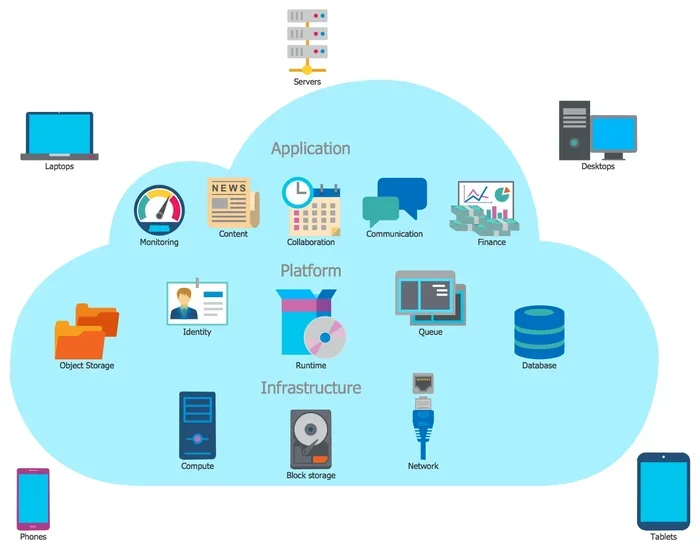
Cloud computing services are generally divided into three main categories. These are often referred to as the cloud computing stack because they build on top of each other. Understanding each category helps you see exactly where serverless fits in.
Infrastructure as a Service (IaaS)
IaaS provides the most basic level of cloud computing resources. You get virtual machines, storage, networks, and operating systems. You are responsible for managing everything above that. Popular IaaS providers include Amazon Web Services (AWS), Microsoft Azure, and Google Cloud Platform.
IaaS is ideal for organizations that want full control over their infrastructure. It is also useful for migrating existing applications to the cloud without major code changes. However, IaaS requires significant management effort and technical expertise.
Platform as a Service (PaaS)
PaaS provides a platform for developing, testing, and deploying applications. The provider manages the underlying infrastructure, operating systems, and middleware. You focus on writing code and building features. PaaS is popular among developers who want a streamlined development experience.
Examples of PaaS include Heroku, Google App Engine, and Red Hat OpenShift. PaaS reduces the operational burden compared to IaaS but still requires you to manage application instances and scaling configurations.
Function as a Service (FaaS)
FaaS is the category where serverless computing lives. It is the most abstracted form of cloud computing. You write individual functions that execute in response to events. The provider handles all infrastructure concerns, including scaling, load balancing, and resource allocation.
FaaS is perfect for building microservices, handling API requests, processing data, and running background tasks. It enables auto-scaling without any manual configuration. You pay only for the compute time your functions consume, which makes it a cost-effective solution for many workloads.
Popular Serverless Computing Platforms
Several major cloud providers offer FaaS platforms that power serverless applications. Each platform has its own strengths, features, and pricing models. Here are the most widely used serverless platforms available today.
AWS Lambda is the most popular serverless platform in the world. It integrates seamlessly with other AWS services like API Gateway, DynamoDB, and S3. AWS Lambda supports multiple programming languages and offers robust scaling capabilities.
Google Cloud Functions provides a simple and lightweight serverless environment. It integrates well with Google Cloud services and supports event-driven architectures. Google Cloud Functions is a strong choice for teams already using the Google Cloud ecosystem.
Microsoft Azure Functions offers a powerful serverless compute service within the Azure platform. It supports various trigger types and programming languages. Azure Functions also integrates with Azure Logic Apps for building automated workflows.
Other notable serverless platforms include IBM Cloud Functions, Cloudflare Workers, and Vercel Functions. Each platform offers unique features and pricing options for different use cases.
Benefits of Serverless Computing
Serverless architecture offers several compelling advantages for developers and businesses. Understanding these benefits helps you make informed decisions about whether serverless is the right choice for your projects.
No Server Management
With serverless computing, you do not need to provision, configure, or maintain servers. The cloud provider handles all infrastructure management tasks. This frees up your team to focus on building and delivering features instead of managing servers.
Automatic Scaling
Serverless platforms automatically scale your functions based on demand. If your application receives a sudden spike in traffic, the platform spins up additional function instances instantly. When traffic decreases, the platform scales down. This auto-scaling capability ensures your application can handle any workload without manual intervention.
Cost Efficiency
Serverless computing uses a pay-per-use billing model. You only pay for the compute time your functions actually consume. There are no charges when your code is idle. This can result in significant cost savings, especially for applications with variable or unpredictable traffic patterns.
Faster Time to Market
Serverless architecture enables developers to build and deploy applications quickly. You can focus on writing small, modular functions rather than managing complex infrastructure. This accelerates development cycles and allows teams to deliver new features faster.
Improved Reliability
Cloud providers manage the underlying infrastructure with high availability and redundancy built in. Serverless platforms automatically handle failover and disaster recovery. This improves the overall reliability and uptime of your applications.
Common Use Cases for Serverless Computing
Serverless computing is not suitable for every application. However, it excels in specific scenarios. Here are some of the most common use cases where serverless architecture shines.
API backends are one of the most popular serverless use cases. You can use serverless functions to handle HTTP requests, process data, and return responses. This approach is lightweight, scalable, and cost-effective for building RESTful APIs.
Data processing and transformation is another strong use case. Serverless functions can process files as they are uploaded to cloud storage. They can transform data, generate reports, or trigger workflows based on incoming data streams.
Real-time file processing is a common pattern. When a user uploads an image or video, a serverless function can automatically resize, compress, or convert the file. This happens instantly without requiring a dedicated server to run continuously.
Scheduled tasks and cron jobs also work well with serverless architecture. You can schedule functions to run at specific intervals to perform maintenance tasks, send notifications, or generate analytics reports.
Internet of Things (IoT) backends benefit from serverless computing as well. Serverless functions can process sensor data, trigger alerts, and interact with databases in real time. This makes serverless a great fit for IoT applications that need to handle large volumes of incoming data.
Common Mistakes to Avoid with Serverless Computing
While serverless computing offers many benefits, there are common pitfalls that teams should avoid. Being aware of these mistakes helps you build better serverless applications.
One mistake is treating serverless like a traditional server setup. Serverless functions are stateless by design. You should not rely on local file storage or in-memory state between function invocations. Instead, use external services like databases or object storage for state management.
Another mistake is writing overly large functions. Serverless functions work best when they are small and focused on a single task. Large functions that try to do too much can become difficult to maintain and debug. Break your logic into smaller, modular functions.
Ignoring cold start times is also a common error. Serverless functions may experience a slight delay when they are invoked after being idle. This is known as a cold start. For latency-sensitive applications, you should design your architecture to minimize the impact of cold starts.
Not monitoring costs carefully can lead to surprises. While serverless is cost-effective, poorly optimized functions or unexpected traffic spikes can drive up costs. Use monitoring tools to track your usage and set up alerts for unusual spending patterns.
Expert Insights on Serverless Computing
Industry experts agree that serverless computing is one of the most important trends in cloud computing today. According to leading analysts, FaaS adoption continues to grow rapidly across industries. Organizations of all sizes are adopting serverless architecture to reduce costs, improve scalability, and accelerate development.
Experts also emphasize that serverless computing is not a replacement for all other cloud service models. IaaS and PaaS still have important roles in the cloud ecosystem. The key is choosing the right model for each specific workload. For event-driven, short-lived tasks, serverless is often the best choice. For long-running processes or applications that require fine-grained control, IaaS or PaaS may be more appropriate.
Many experts also recommend a hybrid approach. Use serverless functions for specific tasks within a larger application. Combine serverless with other cloud services like containers and traditional servers to build a well-rounded architecture. This approach gives you the flexibility to leverage the strengths of each model.
How Serverless Computing Fits Into the Cloud Ecosystem
Serverless computing is part of a broader shift toward cloud-native development. Cloud-native applications are designed specifically for cloud environments. They take advantage of cloud services like FaaS, managed databases, container orchestration, and serverless storage.
Serverless architecture complements other cloud-native technologies. For example, you might use Kubernetes for container orchestration alongside serverless functions for event processing. You might use a managed database for persistent storage and serverless functions for real-time data processing. This combination of services creates powerful, scalable, and cost-effective applications.
The cloud deployment model continues to evolve as new technologies emerge. Serverless computing represents a significant step forward in the evolution of cloud services. It pushes the level of abstraction higher, allowing developers to focus even more on business logic and less on infrastructure.
Final Thoughts
Serverless computing falls under the Function as a Service (FaaS) category of cloud computing services. This places it as one of the three main cloud service models alongside IaaS and PaaS. FaaS represents the highest level of abstraction in cloud computing, where you write code and the provider handles everything else.
Understanding where serverless fits in the cloud computing landscape is essential for making informed technology decisions. Serverless architecture offers incredible benefits including automatic scaling, cost efficiency, and faster development cycles. It is an excellent choice for event-driven applications, API backends, data processing, and many other use cases.
As cloud technology continues to evolve, serverless computing will likely play an even bigger role. More organizations are discovering the advantages of FaaS every day. Whether you are just getting started with cloud computing or looking to optimize your existing architecture, serverless computing is a powerful tool worth exploring.
Start small. Experiment with serverless functions on a project. Learn how the model works in practice. You will quickly see why so many developers and businesses are embracing serverless architecture as a key part of their cloud strategy.
Frequently Asked Questions
Is serverless computing the same as having no servers?
No, serverless computing does not mean there are no servers. Servers still exist in the cloud provider’s data centers. The term “serverless” means you do not have to manage or provision servers yourself. The cloud provider handles all server management tasks behind the scenes.
What is the main difference between FaaS and PaaS?
The main difference is the level of abstraction. PaaS lets you manage application instances and runtime environments. FaaS takes it a step further by abstracting away even the application instance level. You simply write a function and define triggers. The provider handles everything else, including automatic scaling and resource allocation.
Can serverless computing replace traditional servers entirely?
Serverless computing is not a one-size-fits-all solution. It works best for event-driven, short-lived, and stateless workloads. Long-running processes, applications that require fine-grained control over the operating system, and workloads with steady, predictable traffic may still benefit from traditional servers or IaaS. A hybrid approach often works best.
How does pay-per-use billing work in serverless computing?
In serverless computing, you pay only for the compute time your functions actually consume. Billing is measured in milliseconds of execution time. There are no charges when your code is idle. This model can lead to significant cost savings compared to paying for always-on servers.
Which cloud providers offer serverless computing services?
All major cloud providers offer serverless FaaS platforms. Amazon Web Services provides AWS Lambda. Google Cloud Platform offers Google Cloud Functions. Microsoft Azure provides Azure Functions. Other providers like IBM Cloud and Cloudflare also offer serverless solutions with unique features and pricing models.
What skills do I need to get started with serverless computing?
You need basic programming skills and an understanding of cloud services. Familiarity with a supported programming language like Python, JavaScript, or Go is helpful. Understanding event-driven architecture and basic cloud concepts like APIs and storage services will give you a strong foundation for building serverless applications.
=== CONCLUSION ===
Serverless computing falls under the Function as a Service (FaaS) category of cloud computing services. This classification places it as a distinct and powerful model within the broader cloud ecosystem. Unlike IaaS and PaaS, FaaS gives developers the highest level of abstraction, allowing them to focus entirely on writing code without worrying about infrastructure management.
The rise of serverless architecture has changed how teams build, deploy, and scale applications. With benefits like automatic scaling, pay-per-use billing, and faster development cycles, FaaS has become a go-to choice for modern cloud-native development. Understanding this category helps you make smarter decisions about which cloud services to use for different parts of your application.
Serverless computing is not a replacement for all other cloud models. It is a powerful tool in your toolbox. Use it where it shines, combine it with other cloud services when needed, and always keep learning about new developments in the cloud computing space. The future of cloud technology is bright, and serverless computing is at the forefront of that evolution.