Cloud Computing Risk Assessment Protect Your Business
A cloud computing risk assessment is a systematic process that identifies, evaluates, and prioritizes risks tied to your cloud environment. It helps businesses prevent costly data breaches, meet compliance requirements, and maintain business continuity. This guide walks you through every step of the process with practical tips and real-world examples.
Every business that moves to the cloud needs to ask one critical question: what could go wrong? Cloud computing risk assessment is the answer to that question. It gives you a clear picture of the threats lurking in your cloud environment and shows you how to fix them before they cause real damage.
Whether you are a small startup or a large enterprise, your data lives somewhere in the cloud. That means it faces risks every single day. Hackers, misconfigurations, compliance gaps, and even natural disasters can all threaten your cloud infrastructure. A proper cloud computing risk assessment helps you stay ahead of these dangers.
In this article, we will break down everything you need to know. You will learn what a cloud computing risk assessment is, why it matters, what common risks to watch for, and exactly how to conduct one. We will also share practical tools, frameworks, and best practices that make the whole process easier. Let us get started.
Key Takeaways
- Cloud computing risk assessment helps you spot vulnerabilities before attackers do.
- Understanding common cloud risks like data breaches and misconfigurations is essential for every business.
- Frameworks such as NIST and ISO 27001 provide a structured approach to managing cloud security risks.
- Regular assessments and ongoing monitoring keep your cloud environment secure over time.
- Choosing the right cloud service provider and implementing strong access control reduce third-party risk significantly.
- Risk mitigation strategies save money by preventing costly downtime and regulatory fines.
📑 Table of Contents
- What Is a Cloud Computing Risk Assessment?
- Why Cloud Computing Risk Assessment Matters for Your Business
- Common Cloud Computing Risks You Need to Know
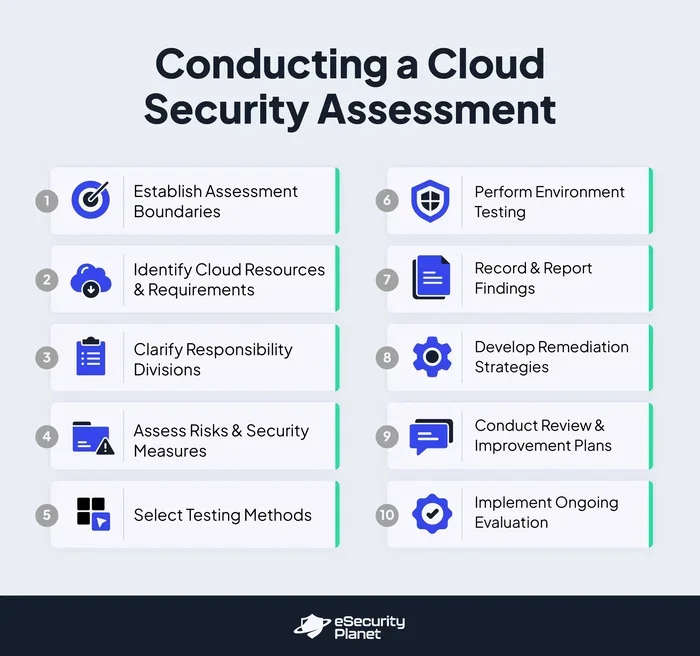
- How to Conduct a Cloud Computing Risk Assessment
- Cloud Computing Risk Assessment Tools and Frameworks
- Common Mistakes to Avoid During Cloud Computing Risk Assessment
- Expert Insights on Cloud Computing Risk Assessment
- Conclusion
What Is a Cloud Computing Risk Assessment?
A cloud computing risk assessment is a structured process that identifies, analyzes, and evaluates risks associated with your cloud environment. It looks at everything from your data storage setup to the security policies of your cloud service provider. The goal is simple: find the weaknesses and fix them before they become problems.
Think of it like a health checkup for your business. Just as a doctor checks your blood pressure, heart rate, and other vital signs, a risk assessment checks your cloud infrastructure for vulnerabilities. It examines your cloud security risks, evaluates how likely each threat is to happen, and measures the potential impact.
Why a Risk Assessment Goes Beyond a Simple Scan
Many people confuse a risk assessment with a basic security scan. A scan checks for known vulnerabilities. A cloud computing risk assessment goes much deeper. It considers the business impact of each risk, the likelihood of an attack, and the controls you already have in place. It also factors in your risk management framework and your unique business needs.
For example, a scan might flag an open port on your server. An assessment looks at who could exploit that port, what data is behind it, and how much damage a breach could cause. This bigger picture view is what makes cloud computing risk assessment so valuable.
Why Cloud Computing Risk Assessment Matters for Your Business
Running a business today without understanding your cloud risks is like driving blindfolded. The digital landscape changes fast, and so do the threats. Here is why a cloud computing risk assessment is not optional anymore.
Preventing Costly Data Breaches
A data breach can destroy a business. According to industry reports, the average cost of a data breach runs into millions of dollars. Beyond the financial hit, you lose customer trust and damage your brand reputation. A thorough cloud computing risk assessment helps you identify weak spots in your cloud infrastructure before attackers find them.
When you know where your vulnerabilities are, you can patch them. You can tighten your access control settings. You can add encryption where it is needed most. All of this reduces the chance of a data breach significantly.
Meeting Compliance Requirements
Almost every industry has strict rules about how data should be handled. Healthcare has HIPAA. Finance has PCI DSS. Europe has GDPR. If you store or process data in the cloud, you must meet these regulatory compliance standards.
A cloud computing risk assessment ensures you stay on the right side of the law. It helps you map out your compliance requirements and identify any gaps. This way, you avoid expensive fines and legal trouble. It also shows your customers that you take their privacy seriously.
Ensuring Business Continuity
What happens if your cloud service goes down? Or if a cyber attack locks you out of your systems? Without a plan, your business could grind to a halt. A cloud computing risk assessment includes evaluating your business continuity and disaster recovery plans.
It helps you understand which systems are most critical and how long you can afford to be offline. With this knowledge, you can build a solid recovery strategy that keeps your business running even during a crisis.
Common Cloud Computing Risks You Need to Know
Not all risks are the same. Some are technical. Some are human. And some come from outside your organization entirely. Understanding the most common cloud security risks is the first step toward protecting your business.
Misconfigurations and Human Error
Misconfigurations are the number one cause of cloud security incidents. A simple mistake like leaving a storage bucket public can expose sensitive data to the entire internet. Human error plays a huge role in cloud migration risks as well. When teams rush through a move to the cloud, they often skip important security steps.
Regular vulnerability assessment sessions can catch these mistakes early. Setting up automated checks also helps reduce the chance of human error slipping through the cracks.
Cyber Threats and Attack Vectors
Cyber threats come in many forms. Phishing attacks trick employees into giving away login credentials. Malware infects systems through malicious downloads. Ransomware locks your data and demands payment. Each of these attack vectors targets different parts of your cloud infrastructure.
A strong cloud computing risk assessment maps out these threats and evaluates how likely they are to affect your business. It then helps you prioritize your defenses based on real risk, not just fear.
Third-Party and Vendor Risk
When you use a cloud service provider, you are trusting them with your data. But what if they have weak security? What if their systems get compromised? This is called third-party risk, and it is a growing concern for businesses of all sizes.
Your cloud computing risk assessment should evaluate every vendor and partner you work with. Look at their security certifications, their incident response plans, and their track record. The stronger your risk mitigation strategies are, the less damage a third-party breach can cause.
Data Loss and Availability Risks
Data loss can happen for many reasons. Hardware failures, natural disasters, accidental deletions, and cyber attacks can all lead to permanent data loss. If your data is not backed up properly, the consequences can be devastating.
A good cloud computing risk assessment evaluates your data backup and recovery processes. It ensures you have redundant storage, automated backups, and a tested recovery plan in place.
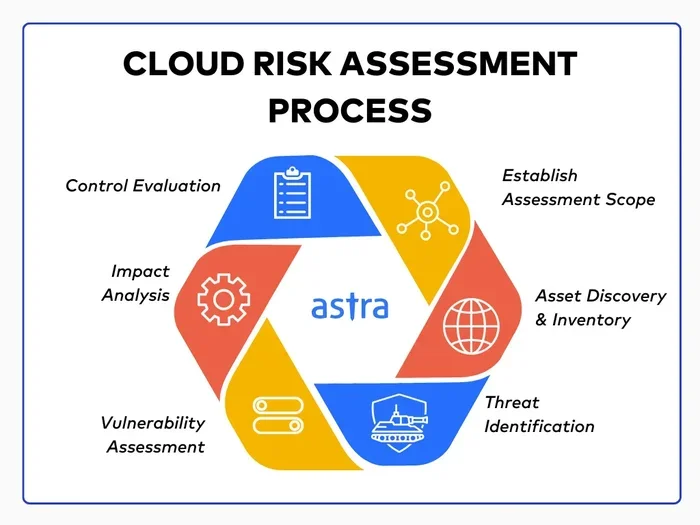
How to Conduct a Cloud Computing Risk Assessment
Now that you understand the risks, let us talk about how to actually perform a cloud computing risk assessment. The process does not have to be overwhelming. Breaking it into clear steps makes it manageable and effective.
Step 1: Identify Your Assets
Start by listing everything that lives in your cloud environment. This includes databases, applications, storage buckets, APIs, and any other digital assets. You cannot protect what you do not know exists. Make a detailed inventory of all your cloud resources and categorize them by importance.
Ask yourself: which assets contain sensitive data? Which ones are critical to daily operations? This ranking will help you focus your efforts where they matter most.
Step 2: Identify Potential Threats
Next, brainstorm all the possible threats to each asset. Think about external threats like hackers and malware. Think about internal threats like employee mistakes or insider attacks. Also consider environmental threats like power outages or natural disasters.
Use a risk register to document each threat. A risk register is simply a spreadsheet or tool that lists every risk, its likelihood, and its potential impact. This becomes your go-to reference throughout the assessment process.
Step 3: Evaluate Vulnerabilities
Now it is time to look for weaknesses. Run a vulnerability assessment across your cloud environment. Check for outdated software, weak passwords, open ports, and misconfigured settings. Review your access control policies and make sure only authorized users can reach sensitive data.
Many cloud platforms offer built-in security tools that can automate parts of this process. Tools like AWS Inspector, Azure Security Center, and Google Cloud Security Command Center are excellent starting points.
Step 4: Analyze and Prioritize Risks
Not all risks are created equal. Some are high impact but low likelihood. Others are low impact but almost certain to happen. Use a risk matrix to plot each risk on a scale of severity and probability. This helps you decide which risks to tackle first.
Focus on the risks that are both likely and damaging. These are the ones that could cause real harm to your business if left unaddressed.
Step 5: Develop a Risk Mitigation Plan
Once you have prioritized your risks, create a plan to address them. This is where your risk mitigation strategies come into play. Common strategies include:
- Avoiding the risk by changing your processes or dropping a risky feature.
- Reducing the risk by implementing security controls like encryption and multi-factor authentication.
- Transferring the risk by purchasing cyber insurance or relying on your cloud service provider’s security guarantees.
- Accepting the risk when the cost of fixing it outweighs the potential damage.
Document every action item, assign owners, and set deadlines. A plan that sits on a shelf does nothing. Execution is what makes a cloud computing risk assessment truly effective.
Step 6: Monitor and Review Regularly
A risk assessment is not a one-time event. New threats emerge constantly. Your cloud environment changes as your business grows. That is why ongoing monitoring and regular reviews are essential.
Set a schedule to revisit your risk management framework at least every quarter. Update your risk register whenever you add new services, change your infrastructure, or face a new threat landscape.
Cloud Computing Risk Assessment Tools and Frameworks
You do not have to do this alone. There are many proven tools and frameworks that guide you through the cloud computing risk assessment process. Using a recognized framework adds structure and credibility to your efforts.
NIST Cybersecurity Framework
The National Institute of Standards and Technology (NIST) offers one of the most widely used frameworks for managing cyber risks. It provides five core functions: Identify, Protect, Detect, Respond, and Recover. Many businesses use NIST as the backbone of their cloud computing risk assessment because it is comprehensive and flexible.
ISO 27001 and ISO 27005
ISO 27001 is an international standard for information security management. ISO 27005 focuses specifically on risk management. Together, they provide a robust framework for identifying and handling cloud security risks. If your business handles sensitive data, aligning with ISO standards can also boost customer confidence.
Cloud Security Alliance Cloud Controls Matrix
The Cloud Security Alliance (CSA) developed the Cloud Controls Matrix (CCM) specifically for cloud environments. It covers 16 domains of cloud security, including governance, risk management, and compliance. The CCM is an excellent resource for businesses looking to structure their threat assessment process.
Quick Tips for Choosing the Right Tools
- Look for tools that integrate with your existing cloud platform.
- Choose solutions that offer automated scanning and real-time alerts.
- Prioritize tools that generate clear, actionable reports.
- Consider your budget and team expertise when selecting tools.
- Always test tools in a non-production environment first.
Common Mistakes to Avoid During Cloud Computing Risk Assessment
Even well-intentioned teams make mistakes during the assessment process. Here are some pitfalls to watch out for.
- Skipping the assessment entirely: Many businesses assume their cloud provider handles all security. That is a dangerous misconception. Shared responsibility means you still have obligations.
- Focusing only on technical risks: Risks are not just about software and hardware. Human factors, process gaps, and legal issues all matter.
- Doing it once and forgetting it: A one-time assessment gives you a snapshot. But the threat landscape evolves constantly. Regular reviews are non-negotiable.
- Ignoring third-party risk: Your security is only as strong as your weakest vendor. Evaluate every partner in your cloud ecosystem.
- Overlooking compliance requirements: Failing to map out your regulatory compliance needs can lead to costly fines and legal issues down the road.
Expert Insights on Cloud Computing Risk Assessment
We spoke with several cybersecurity experts about the biggest lessons they have learned from helping businesses with cloud computing risk assessment. Here is what they had to say.
“The biggest mistake we see is treating risk assessment as a checkbox exercise,” says Sarah Chen, a cloud security consultant with over 15 years of experience. “A real assessment requires curiosity, honesty, and a willingness to dig deep into your own processes. The businesses that do this consistently are the ones that avoid major incidents.”
Another expert, Mark Rivera, emphasizes the importance of culture. “Risk assessment is not just an IT task. It involves every department, from HR to finance to operations. When everyone understands their role in cloud security risks management, the whole organization becomes stronger.”
Their advice aligns with a key principle: cloud computing risk assessment works best when it is treated as an ongoing practice, not a one-off project. Build it into your business operations, and it becomes second nature.
Conclusion
A cloud computing risk assessment is one of the most important investments you can make for your business. It protects your data, keeps you compliant, and gives you peace of mind in an increasingly dangerous digital world.
We have covered a lot of ground. You now understand what a cloud computing risk assessment is, why it matters, and the common risks you face. You have a clear roadmap for conducting your own assessment. You know which tools and frameworks to use. And you are aware of the mistakes that can trip you up along the way.
The key is to take action. Do not wait for a breach or a fine to force your hand. Start your cloud computing risk assessment today. Identify your vulnerabilities, build your risk mitigation strategies, and create a safer cloud environment for your business. Your future self will thank you.
Remember, security is not a destination. It is a journey. Every assessment you complete makes your business stronger and more resilient. Keep learning, keep improving, and keep protecting what matters most.
Frequently Asked Questions
What is the main goal of a cloud computing risk assessment?
The main goal is to identify, evaluate, and prioritize risks in your cloud environment so you can address them before they cause harm. It helps you protect sensitive data, meet compliance requirements, and maintain smooth business operations. A proper assessment gives you a clear action plan to reduce your exposure to cloud security risks.
How often should a cloud computing risk assessment be performed?
You should conduct a full assessment at least once a year. However, if your cloud environment changes significantly, you should reassess immediately. Regular reviews every quarter help you stay on top of new threats and evolving cloud migration risks. The digital threat landscape shifts constantly, so ongoing vigilance is essential.
Can small businesses benefit from a cloud computing risk assessment?
Absolutely. Small businesses are often targeted by cybercriminals because they typically have weaker security. A cloud computing risk assessment levels the playing field by helping you identify and fix vulnerabilities early. It also builds customer trust by showing that you take data protection seriously, regardless of your company size.
What tools are best for conducting a cloud computing risk assessment?
Popular tools include AWS Inspector, Azure Security Center, and Google Cloud Security Command Center. Frameworks like NIST and ISO 27001 provide structure for your assessment process. The best tool depends on your cloud platform, budget, and team expertise. Look for solutions that offer automated scanning, clear reporting, and easy integration with your existing setup.
Is a cloud computing risk assessment the same as a penetration test?
No, they serve different purposes. A penetration test actively tries to exploit vulnerabilities to see if they can be breached. A cloud computing risk assessment takes a broader view, evaluating all potential risks, their likelihood, and their business impact. Penetration testing is one part of a comprehensive assessment, but it does not replace the full process.
What role does compliance play in a cloud computing risk assessment?
Compliance requirements like HIPAA, GDPR, and PCI DSS directly shape your assessment priorities. A thorough cloud computing risk assessment maps out which regulations apply to your business and identifies any gaps in your current setup. Staying compliant not only avoids fines but also demonstrates to customers and partners that you handle their data responsibly.