Best Certification Courses for Cloud Computing in 2024
Cloud computing certifications can transform your career in 2024. The best certification courses for cloud computing cover AWS, Microsoft Azure, and Google Cloud Platform with hands-on training. Whether you are a beginner or an experienced IT pro, these programs build real cloud computing skills that employers value. This guide breaks down the top options, costs, and career benefits so you can pick the right path with confidence.
The cloud computing industry is booming right now. Companies of every size are moving their work to the cloud. This shift has created a massive demand for skilled professionals. If you want to ride this wave, best certification courses for cloud computing are your fastest route to success.
Certifications prove your skills to employers. They show you can handle real cloud tasks. In 2024, the job market for cloud roles is stronger than ever. Roles like cloud architect, cloud engineer, and cloud administrator are in high demand. A solid certification can open doors you did not even know existed.
This guide walks you through the top certification options available today. We cover the major cloud platforms, what each course offers, and how to pick the right one for your goals. By the end, you will have a clear roadmap to start or advance your cloud career.
Key Takeaways
- AWS certifications dominate the market: They remain the most recognized cloud credentials worldwide.
- Microsoft Azure leads in enterprise adoption: Many large organizations rely on Azure for their cloud infrastructure.
- Google Cloud is growing fast: It offers strong options for data analytics and machine learning roles.
- Entry-level certs are a great starting point: You do not need years of experience to begin.
- Salaries rise significantly after certification: Cloud professionals earn higher pay on average.
- Practice labs are essential: Hands-on experience helps you pass exams and perform on the job.
- Choose based on your career goals: Pick the cloud platform that matches the jobs you want.
📑 Table of Contents
- Why Cloud Computing Certifications Matter in 2024
- Top Cloud Certification Providers to Know
- Best Certification Courses for Cloud Computing: Detailed Breakdown
- How to Choose the Right Cloud Certification
- Cloud Computing Certification Roadmap for Beginners
- Career Opportunities After Cloud Certification
- Common Mistakes to Avoid When Pursuing Cloud Certifications
- Expert Insights on Cloud Certification Success
- Key Takeaways
Why Cloud Computing Certifications Matter in 2024
The job market for cloud professionals is expanding fast. More companies are adopting cloud platforms every year. This means the need for trained experts keeps growing. But how do you prove your skills to a hiring manager? The answer is simple: cloud certification.
A certification validates your knowledge. It tells employers you have passed a recognized exam. It shows you understand cloud computing fundamentals like networking, storage, and security. Many hiring managers now list certifications as a must-have on job postings.
Here is why earning a cloud credential matters so much right now:
- Higher earning potential: Certified cloud professionals earn more than non-certified peers. The cloud computing salary boost can be significant.
- Better job opportunities: Many job descriptions specifically ask for cloud certifications.
- Industry recognition: Certifications from AWS, Azure, and Google are trusted worldwide.
- Skill validation: Passing an exam proves you can handle real cloud tasks.
- Career advancement: Certifications help you move up from junior to senior roles.
- Staying current: Cloud platforms update constantly. Certifications ensure you keep learning.
The Rise of Cloud-First Companies
More businesses are going cloud-first. They are moving away from on-premise servers. This trend is not slowing down. Companies need people who can build, manage, and secure cloud environments. That is where cloud computing training comes in. Certifications give you the structured learning path to get job-ready.
Top Cloud Certification Providers to Know
Not all cloud certifications are the same. Three major providers lead the market. Each has its own strengths and focus areas. Let us look at them closely.
Amazon Web Services (AWS)
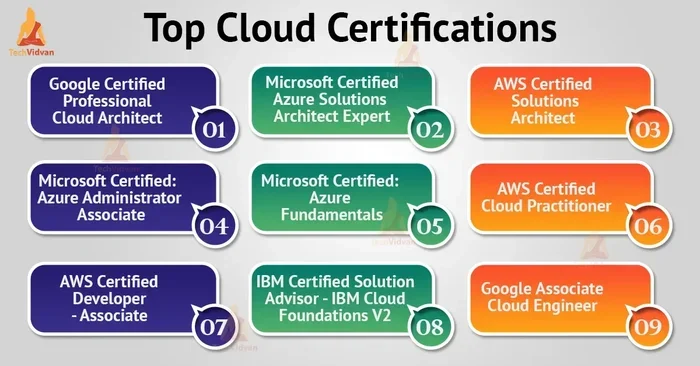
AWS holds the largest share of the cloud market. Its certifications are the most widely recognized. The AWS certification path covers everything from basics to advanced architecture. Whether you want to be a cloud engineer or a solutions architect, AWS has a track for you.
AWS offers four main certification levels:
- Cloud Practitioner: Entry-level. Great for beginners.
- Solutions Architect: Mid-level. Focuses on design and deployment.
- Developer: For those who build cloud applications.
- Advanced Networking or DevOps: Specialized paths for experienced pros.
Microsoft Azure
Azure is the second-largest cloud provider. It is especially strong in the enterprise space. Many large corporations use Azure for their cloud infrastructure. Microsoft certifications are highly valued in corporate environments.
Azure offers a clear certification path too:
- Azure Fundamentals: Perfect starting point for newcomers.
- Azure Administrator: Focuses on managing cloud resources.
- Azure Developer: For building cloud-native applications.
- Azure Solutions Architect: Advanced role for designing cloud systems.
Google Cloud Platform (GCP)
Google Cloud is growing fast. It is known for its strengths in data analytics and machine learning. Google offers a solid certification path for those interested in these areas. The Google Cloud certification is gaining popularity fast.
Google’s certification levels include:
- Cloud Digital Leader: A business-focused entry-level cert.
- Associate Cloud Engineer: Hands-on operational role.
- Professional Cloud Architect: Advanced design and strategy.
- Specialty Certs: Data engineering, security, and more.
Best Certification Courses for Cloud Computing: Detailed Breakdown
Now let us dive into the specific courses. This section covers the top options you should consider in 2024. Each entry includes what you will learn, who it is for, and why it stands out.
AWS Certified Cloud Practitioner
This is the best starting point for absolute beginners. It covers the basics of the AWS platform. You will learn about core services, pricing models, and cloud computing fundamentals. No prior experience is required. The exam is multiple-choice and scenario-based.
Who is this for? Anyone new to cloud computing. It is also great for non-technical roles like sales and marketing teams who work with cloud clients.
Key topics covered:
- Cloud computing concepts and terminology
- Core AWS services and their use cases
- Basic security and compliance in the cloud
- Billing and pricing models
- AWS global infrastructure
AWS Solutions Architect Associate
This is one of the most popular certifications in the industry. It is a step up from the Cloud Practitioner. You will learn to design scalable and reliable systems on AWS. This cert is ideal for aspiring cloud architects.
Key topics covered:
- Designing resilient architectures
- Networking and content delivery
- Database and storage solutions
- Hybrid cloud deployments
- Cost optimization strategies
Microsoft Azure Administrator Associate (AZ-104)
This is the go-to cert for Azure administrators. It covers managing subscriptions, virtual networks, and storage. You will also learn about identity management and monitoring. The AZ-104 exam is challenging but very rewarding.
Key topics covered:
- Managing Azure subscriptions and resources
- Implementing and managing storage
- Configuring and monitoring virtual networks
- Managing identities with Azure Active Directory
- Governance and compliance in Azure
Google Cloud Associate Cloud Engineer
This certification focuses on deploying, managing, and operating applications on GCP. It is hands-on and practical. Google provides free labs and practice environments to help you prepare.
Key topics covered:
- Google Cloud services and solutions
- Infrastructure and application deployment
- Monitoring and logging
- Networking and security
- Cost management and optimization
VMware Certified Professional (VCP)
VMware is a leader in virtualization. Their cloud certifications focus on hybrid cloud environments. This is a great option if your organization uses VMware alongside public cloud platforms. The VCP is a strong vendor-neutral cloud certification choice.
HashiCorp Terraform Associate
Infrastructure as Code (IaC) is a critical skill in modern cloud operations. The Terraform certification validates your ability to manage cloud infrastructure through code. It is platform-agnostic, which means it works across AWS, Azure, and GCP.
How to Choose the Right Cloud Certification
With so many options, picking the right one can feel overwhelming. Here are some practical tips to help you decide.
Consider Your Career Goals
Think about the job you want. Do you see yourself as a cloud architect or a cloud engineer? Different roles require different certifications. For architecture roles, AWS Solutions Architect or Google Professional Cloud Architect are top choices. For operational roles, Azure Administrator or AWS SysOps might be better fits.
Think About Your Current Skill Level
Be honest about where you stand. If you are brand new to cloud, start with a fundamentals cert. Do not jump straight into advanced exams. Building a strong foundation makes learning easier. It also boosts your confidence.
Match the Platform to Your Target Industry
Different industries prefer different platforms. Financial services often use Azure. Startups and tech companies lean toward AWS. Research companies in your target industry. See which platform they use most. Then align your certification choice accordingly.
Check the Cost and Time Investment
Certification exams cost money. AWS exams range from $100 to $300. Azure exams are similar. Google Cloud exams fall in a comparable range. Factor in study materials and practice labs too. Most people spend a few weeks to a few months preparing.
Leverage Free and Low-Cost Resources
You do not need to spend a fortune. All three major providers offer free learning paths. AWS has the AWS Skill Builder. Microsoft provides Microsoft Learn. Google offers Google Cloud Skills Boost. These resources are excellent for self-paced study.
Cloud Computing Certification Roadmap for Beginners
Starting your cloud journey can feel daunting. But a clear roadmap makes it much easier. Here is a step-by-step path you can follow.
Step 1: Pick Your Platform
Choose AWS, Azure, or Google Cloud as your starting point. Do not try to learn all three at once. Focus on one platform first. Master the basics before expanding.
Step 2: Earn Your Fundamentals Certification
Start with the entry-level exam. For AWS, that is the Cloud Practitioner. For Azure, it is the AZ-900. For Google Cloud, it is the Cloud Digital Leader. These exams build a strong foundation.
Step 3: Get Hands-On Practice
Reading alone is not enough. You need real practice. Use free tier accounts from each provider. Build simple projects. Break things and fix them. This hands-on experience is invaluable.
Step 4: Pursue an Associate-Level Certification
Once you feel comfortable, move to the next level. AWS Solutions Architect Associate is a popular choice. Azure Administrator Associate is another strong option. These exams test practical skills.
Step 5: Keep Learning and Specializing
Cloud technology evolves quickly. Keep up with new services and features. Consider specialty certifications in areas like security, data, or machine learning. Continuous learning keeps you competitive.
Career Opportunities After Cloud Certification
Earning a cloud certification opens up many career paths. The demand for cloud talent continues to grow year after year. Let us look at some of the most promising roles.
Cloud Architect
A cloud architect designs cloud solutions for organizations. They plan the overall cloud strategy. This role requires deep technical knowledge and strong problem-solving skills. Certifications like AWS Solutions Architect Professional or Google Professional Cloud Architect are ideal for this path.
Cloud Engineer
A cloud engineer builds and maintains cloud infrastructure. They handle deployment, monitoring, and optimization. This is a hands-on role that values practical skills. Azure Administrator and AWS DevOps certifications are great for this career.
Cloud Security Specialist
Security is a top priority in the cloud. Cloud security specialists protect data and systems. They implement access controls, encryption, and compliance measures. Certifications like AWS Certified Security Specialty or Google Cloud Security Engineer are in high demand.
DevOps Engineer
DevOps combines development and operations. Cloud-native DevOps engineers automate deployments and manage infrastructure as code. Certifications like AWS DevOps Professional and HashiCorp Terraform are excellent for this role.
Cloud Consultant
Cloud consultants help businesses migrate to and optimize their cloud environments. They advise on platform selection, architecture, and cost management. A broad set of certifications across platforms works well for consulting roles.
The cloud computing jobs market is only going to grow. Companies are hiring cloud professionals at all levels. Whether you want to work for a big corporation or as a freelancer, certifications give you the credibility you need.
Common Mistakes to Avoid When Pursuing Cloud Certifications
Many people make avoidable mistakes when pursuing cloud credentials. Here are the most common ones and how to steer clear.
- Skipping fundamentals: Do not jump to advanced exams too quickly. Build your knowledge step by step.
- Relying only on video courses: Hands-on labs are essential. Watching videos alone will not prepare you for real exams or jobs.
- Ignoring practice exams: Practice tests help you understand the exam format. They also reveal weak areas you need to study.
- Choosing a cert without a plan: Pick certifications that align with your career goals. Do not just collect certs for the sake of it.
- Not joining study groups: Learning with others keeps you motivated. Online communities like r/AWSCertifications and r/AzureCertification are very helpful.
- Letting your cert expire: Most cloud certifications expire after a few years. Plan for recertification or stay current with continuing education.
Expert Insights on Cloud Certification Success
We spoke with several cloud professionals about their certification journeys. Here are the key takeaways from their experiences.
One senior cloud architect shared this advice: “Start with the fundamentals. Do not rush. The cloud computing training you do at the beginning sets the tone for everything that follows.”
Another certified professional emphasized practice: “I passed my AWS Solutions Architect exam because I spent hours in the AWS console. Reading the documentation alone was not enough. You have to build things.”
A hiring manager added this perspective: “We look at certifications, but we also look for hands-on experience. The best candidates combine both. A certification gets your foot in the door. Real skills keep you there.”
These insights reinforce a simple truth. The best certification courses for cloud computing combine theory with practice. They give you the knowledge and the hands-on experience employers want.
Key Takeaways
- Start with a fundamentals certification: AWS Cloud Practitioner, Azure AZ-900, or Google Cloud Digital Leader are excellent entry points.
- Pick one platform first: Master it before branching out to others. Depth matters more than breadth at the start.
- Practice in real environments: Use free tier accounts and hands-on labs. Theory alone will not get you through the exams.
- Align your certs with career goals: Choose paths that match the roles you want to pursue.
- Budget for study time: Most people need a few weeks to a few months of preparation. Be consistent with your study schedule.
- Keep learning after certification: Cloud platforms update frequently. Stay current to remain competitive in the job market.
The journey to becoming a certified cloud professional is well worth the effort. The best certification courses for cloud computing provide structure, credibility, and career growth. Whether you are just starting out or looking to level up, there is a certification path that fits your needs. Pick your platform, set your goals, and start learning today. The cloud industry needs skilled professionals, and your next career breakthrough could be just one exam away.
Frequently Asked Questions
What is the easiest cloud certification to start with?
The AWS Certified Cloud Practitioner, Microsoft AZ-900 Azure Fundamentals, and Google Cloud Digital Leader are the easiest starting points. They cover basic cloud concepts and do not require prior technical experience. These are perfect for beginners who want to build confidence first.
How long does it take to get a cloud certification?
It depends on your background and the certification level. Most people spend 4 to 12 weeks preparing for an entry-level exam. Associate-level certifications may take 2 to 3 months. Hands-on practice is a key part of the preparation timeline.
Do cloud certifications really help you get a job?
Yes, they do. Many job postings list cloud certifications as a requirement or strong preference. Certifications validate your skills and show employers you have invested in your career. They also help you stand out from other candidates.
Can I get a cloud certification without a degree?
Absolutely. Cloud certifications do not require a college degree. They are based on skills and knowledge. Many successful cloud professionals are self-taught or come from non-technical backgrounds. The certifications are designed to be accessible to anyone.
Which cloud certification pays the most?
AWS certifications, especially Solutions Architect and DevOps Professional, tend to command the highest salaries. Google Cloud Professional Architect and Azure Solutions Architect also offer strong earning potential. Your salary also depends on your experience level and job role.
Should I get certified in more than one cloud platform?
It depends on your career goals. Starting with one platform is usually the best approach. Once you are comfortable, adding a second platform can make you more versatile. Vendor-neutral certifications like HashiCorp Terraform are also valuable across platforms.
=== CONCLUSION ===
The best certification courses for cloud computing in 2024 offer clear paths to exciting careers. AWS, Microsoft Azure, and Google Cloud each provide strong certification tracks for every skill level. Whether you are a complete beginner or an experienced IT professional, there is a certification that fits your goals.
Start with the fundamentals. Get hands-on practice. Choose a path that aligns with your career ambitions. The cloud industry is growing, and certified professionals are in high demand. Take the first step today, and build the future you deserve in the world of cloud computing.