Cloud Computing Job Description and Required Skills
A cloud computing job description outlines the roles, duties, and skills needed for professionals managing cloud platforms and services. This guide covers everything from core responsibilities to in-demand technical skills and certifications. Whether you are starting out or advancing your cloud computing career, you will find practical tips and clear insights here.
The world of cloud computing job description roles is growing fast. Every day, more companies move their work to the cloud. This shift creates exciting opportunities for people who understand cloud services and cloud infrastructure. If you have ever wondered what these jobs really involve, you are in the right place.
This article breaks down the cloud computing job description in simple terms. You will learn about daily tasks, required skills, and the best certifications to pursue. We also explore different cloud computing roles and how to stand out in a crowded job market. Let us dive in.
Key Takeaways
- Clear role breakdown: Learn what a typical cloud computing job description includes across different positions and seniority levels.
- Top skills covered: Discover the essential cloud computing skills employers look for in candidates today.
- Certifications matter: Find out which cloud certification options boost your chances of landing cloud computing jobs.
- Multiple career paths: Explore the various cloud computing roles available, from cloud engineer to cloud architect.
- Actionable advice: Get practical tips on how to stand out in the competitive cloud job market.
📑 Table of Contents
What Does a Cloud Computing Professional Do?
A cloud computing professional manages, builds, and maintains systems that run on cloud platforms. These platforms include Amazon Web Services, Microsoft Azure, and Google Cloud. The day-to-day work can vary a lot depending on the specific cloud computing roles you hold.
At a basic level, these professionals ensure that applications and data stay available, secure, and fast. They work with teams to deploy new cloud services and manage existing ones. Many also handle cloud migration projects, which involve moving data and applications from old servers to the cloud.
Some professionals focus on writing code and building systems. Others focus on keeping things running smoothly. The exact mix depends on the job title and the company. But most cloud computing responsibilities share a common thread: they revolve around making cloud infrastructure work reliably and efficiently.
Common Daily Tasks
Here are some tasks you might find in a typical cloud computing job description:
- Monitoring cloud platform performance and fixing issues
- Setting up and managing virtual machines and storage
- Writing scripts for automated cloud deployment
- Reviewing security logs and applying updates
- Collaborating with developers on new features
- Documenting system changes and processes
- Optimizing costs by managing resource usage
Cloud Computing Job Description in Detail
A detailed cloud computing job description goes beyond just listing tasks. It also covers the cloud computing requirements that candidates must meet. Employers want to see a mix of education, experience, and technical know-how.
Most job postings start with a summary of the role. This section explains what the position does and why it matters to the business. Then comes a list of duties, followed by the qualifications. Understanding this structure helps you tailor your resume and cover letter.
Key Responsibilities You Will See
When you read through any cloud computing job description, these responsibilities show up often:
- Designing cloud solutions: You plan how applications will run in the cloud. This includes choosing the right services and setting up networks.
- Managing cloud resources: You keep track of servers, storage, and databases. You make sure everything runs without interruption.
- Ensuring security: You apply cloud security best practices. This means setting up access controls, encryption, and monitoring tools.
- Automating workflows: You write scripts and use tools to reduce manual work. Automation is a big part of modern cloud deployment.
- Troubleshooting issues: When something breaks, you find and fix the problem quickly. Downtime costs businesses money, so speed matters.
- Working with teams: You communicate with developers, managers, and other stakeholders. Clear communication makes projects succeed.
Essential Skills for Cloud Computing Roles
The right cloud computing skills can make or break your chances of landing a great role. Employers look for both technical abilities and soft skills. Let us break these down so you know exactly what to focus on.
Technical Skills You Need
Technical skills form the backbone of any cloud engineer skills list. Here are the most important ones:
- Networking: You need to understand how data moves between systems. Knowledge of TCP/IP, DNS, and load balancing is essential.
- Operating systems: Linux and Windows server environments are common. Being comfortable with both gives you an edge.
- Programming: Languages like Python, Java, or Go are widely used in cloud environments. You do not need to be an expert, but basics help.
- Virtualization: Understanding how virtual machines and containers work is fundamental to cloud infrastructure management.
- DevOps practices: Familiarity with CI/CD pipelines, version control, and infrastructure-as-code tools is highly valued.
- Database management: Working with cloud databases like AWS RDS or Azure SQL is a common requirement.
- Security: Knowledge of identity management, firewalls, and compliance standards protects both the company and its clients.
Soft Skills That Set You Apart
Technical skills get your foot in the door. But soft skills help you grow. Employers value these traits in cloud computing roles:
- Problem-solving: You enjoy figuring out why things break and how to fix them.
- Communication: You can explain technical concepts to non-technical team members.
- Adaptability: Cloud technology changes fast. You stay curious and keep learning.
- Teamwork: You work well with others and share credit for wins.
- Attention to detail: Small mistakes in cloud setups can cause big problems.
Certifications That Boost Your Cloud Career
One of the best ways to prove your skills is through a cloud certification. Certifications show employers that you have real knowledge. They also help you stand out from other applicants in the crowded cloud computing jobs market.
Different platforms offer their own certification paths. Here are the most recognized ones:
| Certification | Provider | Best For |
|---|---|---|
| AWS Certified Solutions Architect | Amazon | Designing scalable cloud systems |
| Microsoft Azure Fundamentals (AZ-900) | Microsoft | Beginners new to cloud |
| Google Cloud Professional Cloud Architect | Architecture and design | |
| CompTIA Cloud+ | CompTIA | General cloud knowledge |
| Certified Kubernetes Administrator | CNCF | Container orchestration |
Starting with a beginner-level certification is a smart move. It builds your confidence and gives you a solid foundation. From there, you can pursue advanced certifications that match your cloud computing career goals. Many professionals find that certifications directly impact their cloud computing salary potential too.
Quick Tips for Certification Success
- Practice in a free tier account on the platform you are studying
- Take practice exams to identify weak areas
- Join study groups or online communities for support
- Set a realistic study schedule and stick to it
- Focus on hands-on labs, not just reading
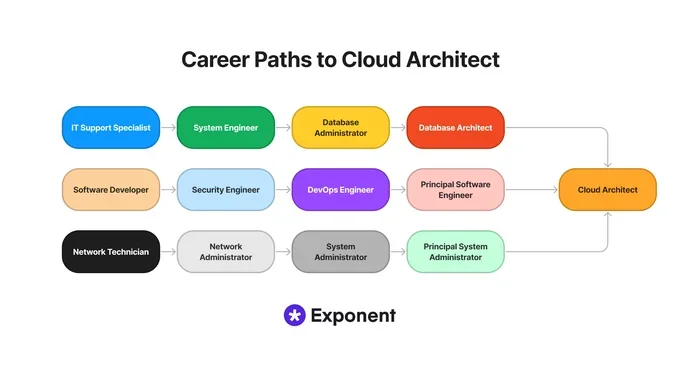
Cloud Computing Career Paths and Growth
The cloud computing career landscape offers many directions. You do not have to stay in one role forever. As you gain experience, new doors open up. Understanding these paths helps you plan your next move.
Common Cloud Computing Roles
Here are some popular cloud computing roles you might encounter:
- Cloud Engineer: You build and maintain cloud systems. You handle cloud deployment and make sure everything runs smoothly.
- Cloud Architect: You design the overall cloud strategy. You make big decisions about how systems fit together.
- DevOps Engineer: You bridge the gap between development and operations. You focus on automation and continuous delivery.
- Cloud Security Specialist: You protect cloud environments from threats. You ensure compliance with industry standards.
- Cloud Administrator: You manage day-to-day cloud operations. You handle user access, backups, and monitoring.
- Solutions Architect: You design solutions that meet specific business needs. You work closely with clients and stakeholders.
How Your Salary Grows
Your cloud computing salary can grow significantly as you gain experience. Entry-level positions often start with solid pay. Mid-level roles with a few years of experience and certifications pay even more. Senior positions, especially cloud architect roles, command top salaries.
Location also plays a role. Tech hubs tend to offer higher pay. But remote work has opened up opportunities everywhere. The demand for skilled cloud professionals continues to rise across industries.
How to Stand Out in the Cloud Job Market
The cloud computing jobs market is competitive but full of opportunity. Standing out takes a mix of the right skills, credentials, and strategy. Here are some practical steps you can take right now.
Build a Strong Portfolio
Employers love to see proof of your work. Create projects that showcase your cloud computing skills. You could build a simple web app on AWS or set up a hybrid cloud environment. Document your projects on GitHub and write about what you learned.
Stay Current with Trends
Cloud technology evolves quickly. New services and tools appear all the time. Following industry blogs, joining cloud communities, and attending webinars keeps you informed. Being aware of trends like serverless computing, edge computing, and cloud migration strategies shows employers you are serious.
Practice for Interviews
Interview questions for cloud computing roles often include scenario-based problems. Practice explaining how you would handle common situations. Be ready to discuss your experience with specific platforms and tools. Confidence and clear communication go a long way.
Network and Connect
Networking opens doors that job postings alone cannot. Join cloud-focused groups on LinkedIn or local meetups. Share your knowledge online through blogs or forums. Many professionals land their best cloud computing jobs through connections, not cold applications.
Common Mistakes to Avoid
- Focusing only on one cloud platform when employers value multi-cloud knowledge
- Neglecting security skills, which are critical in every cloud role
- Skipping hands-on practice in favor of only reading theory
- Ignoring soft skills like communication and teamwork
- Applying without tailoring your resume to the specific cloud computing job description
Final Thoughts on Cloud Computing Careers
The cloud computing job description covers a wide range of exciting and rewarding opportunities. Whether you are drawn to building systems, securing data, or automating processes, there is a cloud computing role for you. The key is to build strong skills, earn relevant certifications, and stay curious about new developments.
The cloud industry is not slowing down. Companies of all sizes continue to move to the cloud. This means the demand for skilled professionals will only grow. By investing in your cloud computing skills today, you are setting yourself up for a future-proof career.
Start small. Pick one platform, earn your first certification, and build a project. Every step forward counts. The cloud world is waiting for you.
Frequently Asked Questions
What is a typical cloud computing job description?
A typical cloud computing job description outlines responsibilities like managing cloud platforms, deploying applications, ensuring security, and optimizing costs. It also lists required skills in networking, programming, and cloud services management.
What skills are most important for cloud computing roles?
The most important cloud computing skills include networking, Linux administration, programming basics, virtualization, and DevOps practices. Security knowledge and problem-solving abilities are also highly valued by employers.
Do I need a certification to work in cloud computing?
Certifications are not always mandatory, but they significantly boost your chances. A cloud certification from AWS, Microsoft, or Google proves your expertise and helps you stand out in the competitive cloud computing jobs market.
What is the salary range for cloud computing professionals?
Salaries vary based on experience, location, and role. Entry-level positions start competitively, while senior roles like cloud architect can command significantly higher pay. Overall, the cloud computing salary trend is strong and growing.
Can I switch to cloud computing from another IT role?
Yes, many professionals transition into cloud computing careers from traditional IT roles. Your existing knowledge of systems, networks, and databases gives you a solid foundation. Adding a cloud certification and hands-on practice makes the switch smoother.
What are the best cloud platforms to learn?
AWS, Microsoft Azure, and Google Cloud are the top three platforms. Learning one deeply is a great start. Then, exploring cloud platform features across multiple providers makes you more versatile in the job market.
=== CONCLUSION ===
A well-written cloud computing job description gives you a clear picture of what employers want. From technical skills to certifications and soft skills, every detail matters. The cloud computing roles available today are diverse, rewarding, and future-proof.
By focusing on the right cloud computing skills, earning recognized certifications, and gaining hands-on experience, you can build a successful career in this exciting field. The opportunities are real, the demand is growing, and the time to start is now.