Why Data Encryption in Cloud Computing Is So Important
Data encryption in cloud computing is the backbone of modern digital security. It protects your sensitive information from unauthorized access, cyber attacks, and data breaches. Whether you store files, run applications, or manage databases in the cloud, encryption keeps your digital assets safe. This guide covers everything you need to know about cloud security and encryption protocols. You will learn practical tips, common mistakes, and expert insights to strengthen your defense.
Every day, millions of people and businesses store important files in the cloud. They upload photos, share documents, and run entire operations online. But have you ever stopped to think about who else might see that information? The truth is, the cloud is not a locked vault. It is a shared environment where your data travels through servers, networks, and devices. That is exactly why data encryption in cloud computing matters so much.
Think of encryption as a secret language. Only people with the right key can read your files. Everyone else just sees scrambled nonsense. This simple idea is the foundation of cloud security. Without it, your sensitive information is left wide open to cyber attacks, unauthorized access, and data breaches. In this article, we will break down everything you need to know about protecting your data in the cloud.
We will explore how encryption works, why it matters, and what you can do right now to improve your cloud security. Whether you are a small business owner or a curious individual, this guide will give you practical, actionable advice. Let us dive in.
Key Takeaways
- Encryption is non-negotiable: Data encryption in cloud computing ensures that your sensitive information stays unreadable to anyone without the right encryption keys.
- Two types matter: Encryption for data at rest and data in transit are both essential for complete cloud security.
- Compliance depends on it: Privacy laws like GDPR and HIPAA require strong encryption to protect user data.
- Your cloud provider is not enough: You must take additional steps like managing your own encryption keys and enabling end-to-end encryption.
- Common mistakes happen: Weak key management and ignoring access control are the top errors organizations make.
- Actionable steps work: Choosing the right encryption algorithms and auditing your setup regularly makes a huge difference.
📑 Table of Contents
- What Is Data Encryption in Cloud Computing?
- Why Data Encryption in Cloud Computing Is So Important
- Types of Encryption Used in the Cloud
- Common Threats That Encryption Protects Against
- How to Strengthen Your Cloud Encryption Strategy
- Quick Tips for Better Cloud Encryption
- Common Mistakes People Make with Cloud Encryption
- Expert Insights on Cloud Data Protection
- Key Takeaways
- Conclusion
What Is Data Encryption in Cloud Computing?
Encryption is the process of turning readable data into an unreadable format. Only someone with the correct encryption keys can decode it back. In cloud computing, this process happens both when you store files and when you send them across the internet.
The goal is simple: keep your sensitive information safe from prying eyes. No matter who intercepts your data, they cannot understand it without the key. This is the core principle behind cloud security.
How Does It Work?
When you upload a file to cloud storage, the system uses an encryption algorithm to scramble the content. The scrambled version is what actually gets saved on the server. When you want to access the file, the system uses your encryption keys to unscramble it. This all happens in seconds, and you barely notice it.
There are two main moments when encryption applies:
- Data at rest: This is your stored data sitting on a server. It stays encrypted until someone with the right key requests it.
- Data in transit: This is your data moving between your device and the cloud. It stays protected during the journey.
Both types are essential. If you only encrypt one, your data is still vulnerable during the other phase.
Why Data Encryption in Cloud Computing Is So Important
The importance of data encryption in cloud computing cannot be overstated. Every year, millions of records are exposed through data breaches. Hackers target cloud systems because they hold vast amounts of valuable information. Without encryption, that information is easy pickings.
It Stops Unauthorized Access
Even if a hacker gets into a cloud server, encrypted data is useless to them. They cannot read, sell, or misuse it without the encryption keys. This makes encryption your strongest line of defense against unauthorized access.
It Helps You Stay Compliant
Many industries must follow strict compliance regulations. Healthcare, finance, and government organizations all have rules about how to handle sensitive information. Strong encryption standards are often a legal requirement. Without them, you risk heavy fines and legal trouble.
It Builds Trust
When your customers know their data is encrypted, they trust you more. Data protection is not just a technical issue. It is a reputation issue. Businesses that prioritize cloud security win more clients and retain customers longer.
Types of Encryption Used in the Cloud
Not all encryption is the same. Different encryption protocols offer different levels of protection. Understanding them helps you make better decisions about your secure cloud setup.
Symmetric Encryption
In symmetric encryption, the same key encrypts and decrypts data. It is fast and efficient. This makes it ideal for large amounts of data at rest. The challenge is sharing the key safely. If someone intercepts the key, they can unlock everything.
Asymmetric Encryption
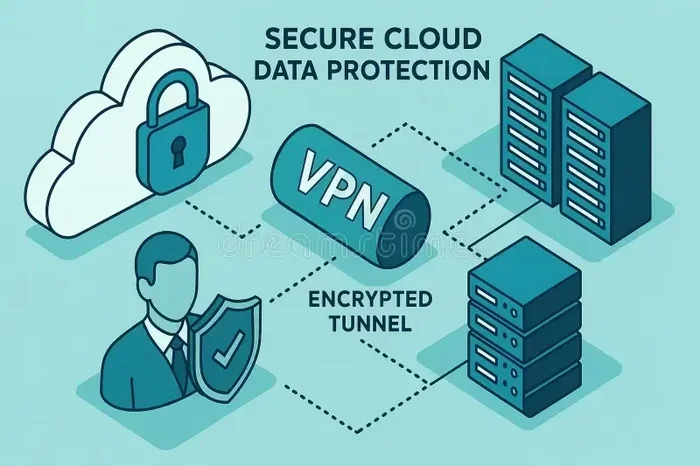
Asymmetric encryption uses two keys: a public key and a private key. Anyone can encrypt data with the public key, but only the private key holder can decrypt it. This is great for data in transit because it solves the key-sharing problem. However, it is slower than symmetric encryption.
End-to-End Encryption
End-to-end encryption is the gold standard. Data is encrypted on your device and only decrypted on the recipient’s device. Even the cloud provider cannot read it. This level of protection is perfect for highly sensitive communications and file sharing.
Common Threats That Encryption Protects Against
The digital world is full of dangers. Understanding these threats helps you see why encryption algorithms are so vital.
Data Breaches
A data breach happens when someone gains access to your stored information. These incidents are rising every year. Encryption ensures that even if a breach occurs, the stolen data remains unreadable and useless.
Man-in-the-Middle Attacks
In a man-in-the-middle attack, a hacker intercepts data while it travels between your device and the cloud. They can eavesdrop or even alter the information. Encryption for data in transit prevents this by making intercepted data completely unreadable.
Insider Threats
Not all threats come from outside. Sometimes, employees or contractors misuse their access. Strong access control combined with encryption limits what insiders can actually see or steal.
How to Strengthen Your Cloud Encryption Strategy
Having encryption is not enough. You need the right strategy to make it work effectively. Here are practical steps you can take today.
Choose Strong Encryption Algorithms
Not all algorithms are created equal. AES-256 is currently the industry standard for strong protection. It is trusted by governments and businesses worldwide. Always verify that your cloud provider uses modern, vetted algorithms.
Manage Your Encryption Keys Carefully
Your encryption keys are the most important part of the system. If a key is lost, your data is gone forever. If a key is stolen, your data is exposed. Use a dedicated key management system. Rotate keys regularly. Never store keys in the same location as the encrypted data.
Enable Encryption for Everything
Do not pick and choose what to encrypt. Enable protection for all cloud storage, databases, and communications. Every unprotected file is a potential weak link in your cloud security chain.
Audit Your Setup Regularly
Set a schedule to review your encryption settings. Check for vulnerabilities. Update your algorithms as new standards emerge. Regular audits catch problems before they become serious issues.
Educate Your Team
Technology alone cannot protect you. Your team needs to understand data protection basics. Train them on password hygiene, phishing awareness, and proper handling of sensitive information. A well-informed team is a strong defense.
Quick Tips for Better Cloud Encryption
- Always use end-to-end encryption for the most sensitive files and communications.
- Use multi-factor authentication alongside encryption to add another layer of protection.
- Read your cloud provider’s security policy to understand what they encrypt by default.
- Back up your encryption keys in a secure, separate location.
- Stay updated on encryption standards and upgrade when better options become available.
- Test your setup regularly by running security audits and vulnerability scans.
Common Mistakes People Make with Cloud Encryption
Even with the best intentions, people make errors that weaken their cloud security. Here are the most common ones to avoid.
Assuming Your Cloud Provider Handles Everything
Many people believe that because they use a cloud provider, their data is automatically encrypted. This is not always true. Some providers encrypt data at rest but not in transit. You need to check and enable all available encryption options yourself.
Ignoring Key Management
Poor key management is the number one reason encryption fails. Storing keys in plain text, sharing them carelessly, or never rotating them creates serious vulnerabilities. Treat your encryption keys with the same care as the data they protect.
Using Outdated Algorithms
Encryption technology evolves quickly. Algorithms that were secure five years ago may be crackable today. Stay current with encryption standards and upgrade your algorithms before they become obsolete.
Overlooking Data in Transit
People often focus on protecting stored data and forget about data moving between devices and servers. Always ensure your connections use encryption protocols like TLS to protect data in transit.
Expert Insights on Cloud Data Protection
Data protection experts agree on a few key principles. First, defense in depth is critical. No single tool or setting can protect you completely. Encryption is one layer, but it works best alongside access control, monitoring, and regular audits.
Second, zero trust is the modern approach. Never assume that anything inside your network is safe. Verify every request, every connection, and every access attempt. This mindset pairs perfectly with strong encryption standards.
Finally, compliance is not the same as security. Meeting compliance regulations is a baseline, not a goal. Aim to exceed the minimum requirements. Your sensitive information deserves the strongest protection you can provide.
Key Takeaways
- Encryption is non-negotiable: Data encryption in cloud computing ensures your sensitive information stays unreadable to anyone without the right encryption keys.
- Two types matter: Encryption for data at rest and data in transit are both essential for complete cloud security.
- Compliance depends on it: Privacy laws like GDPR and HIPAA require strong encryption to protect user data.
- Your cloud provider is not enough: You must take additional steps like managing your own encryption keys and enabling end-to-end encryption.
- Common mistakes happen: Weak key management and ignoring access control are the top errors organizations make.
- Actionable steps work: Choosing the right encryption algorithms and auditing your setup regularly makes a huge difference.
Conclusion
Data encryption in cloud computing is not optional. It is a fundamental requirement for anyone who stores or shares information online. Cyber threats grow more sophisticated every day, and your sensitive information deserves strong protection. Encryption keeps your data safe whether it is sitting on a server or traveling across the internet.
By understanding how encryption algorithms work, choosing the right encryption protocols, and following best practices for key management, you build a powerful defense. Add regular audits, team education, and a zero trust mindset, and you create a truly secure cloud environment.
The steps outlined in this guide are practical and achievable. You do not need to be a security expert to get started. Start today. Review your cloud settings, enable encryption everywhere, and manage your keys properly. Your digital assets are worth the effort.
FAQs
What is the difference between encryption for data at rest and data in transit?
Data at rest encryption protects files stored on a server. Data in transit encryption protects files while they are being sent between your device and the cloud. Both are necessary for complete protection of your sensitive information in cloud storage.
Do all cloud providers encrypt data by default?
Not all of them do. Some providers offer basic encryption for stored data, but you should always check the details. Verify whether your cloud provider encrypts data at rest, in transit, or both. You may need to enable additional settings yourself.
Can encrypted data still be breached?
Yes, but encrypted data is useless to attackers without the encryption keys. Even if hackers access a system, they cannot read or misuse scrambled information. This is why strong key management is just as important as the encryption itself.
What encryption standard is considered the most secure?
AES-256 is widely regarded as the gold standard for strong encryption. It is used by governments, financial institutions, and tech companies worldwide. Always ensure your cloud setup uses modern, vetted encryption algorithms.
How does encryption help with compliance regulations?
Privacy laws like GDPR and HIPAA require organizations to protect user data. Strong encryption is a key requirement for meeting these standards. Without it, businesses risk fines, legal action, and loss of customer trust.
Is end-to-end encryption better than standard cloud encryption?
Yes, end-to-end encryption offers the highest level of protection. Data is encrypted on your device and only decrypted on the recipient’s device. Even the cloud provider cannot access the unencrypted content. For highly sensitive communications and files, it is the best choice.