Data Engineering and Cloud Computing Guide for Beginners
Data engineering and cloud computing work together to help businesses store, process, and analyze massive amounts of data. This guide breaks down everything beginners need to know, from core concepts to real-world tools and career paths. You will learn how data pipelines, cloud platforms, and ETL processes power the modern digital world.
Key Takeaways
- Data engineering and cloud computing form the backbone of modern data-driven businesses.
- Cloud platforms like AWS, Azure, and GCP offer scalable tools for building data systems.
- ETL processes and data pipelines are essential for moving and transforming raw data.
- You do not need a computer science degree to start learning these skills.
- Hands-on practice with real tools is the fastest way to build expertise.
- Career opportunities in this field are growing rapidly across all industries.
📑 Table of Contents
- What Is Data Engineering and Cloud Computing?
- Core Concepts in Data Engineering
- Cloud Computing Fundamentals
- Tools and Technologies for Data Engineering
- How Data Engineering and Cloud Computing Work Together
- Getting Started with Data Engineering and Cloud Computing
- Common Mistakes Beginners Make
- Career Opportunities and Growth
- Final Thoughts on Data Engineering and Cloud Computing
What Is Data Engineering and Cloud Computing?
Let us start with the basics. Data engineering and cloud computing are two fields that work hand in hand to make data useful for businesses. Data engineering focuses on building systems that collect, store, and process raw data. Cloud computing provides the infrastructure and tools to do all of that without needing physical servers.
Think of it this way. Data is like water flowing through pipes. Data engineers design and build those pipes. Cloud computing gives them the space and power to keep everything running smoothly. Together, they create the foundation for analytics, machine learning, and business intelligence.
Every time you open an app, check your bank balance, or stream a movie, data engineering and cloud computing are working behind the scenes. They make sure the right information reaches the right place at the right time. Understanding these concepts opens up a world of opportunity.
Why These Fields Matter Today
Businesses today generate enormous amounts of data every single day. Customer clicks, social media posts, sensor readings, and transaction records all add up fast. Without proper systems, this data becomes useless noise. That is where data engineering steps in.
Cloud computing makes it possible to scale these systems up or down based on demand. You do not need to buy expensive hardware upfront. Instead, you pay for what you use. This flexibility is why companies of all sizes are moving to the cloud.
The demand for skilled professionals in both fields continues to grow. Organizations need people who can build reliable data systems and manage cloud infrastructure. Whether you are a complete beginner or already in tech, learning these skills gives you a serious edge.
Core Concepts in Data Engineering
Before diving into tools and platforms, it helps to understand the foundational concepts. These ideas form the building blocks of every data engineering project. Let us walk through them one by one.
Data Pipelines
A data pipeline is a series of steps that moves data from one place to another. Think of it as an assembly line for information. Raw data enters at one end, gets transformed along the way, and comes out as useful, organized data at the other end.
Data pipelines handle tasks like extraction, transformation, and loading. They also manage data quality checks and error handling. A well-designed pipeline runs automatically and reliably, day after day.
ETL Processes
ETL stands for Extract, Transform, Load. It is one of the most common patterns in data engineering. Here is how it works:
- Extract: Pull raw data from different sources like databases, APIs, or files.
- Transform: Clean, filter, and restructure the data into a usable format.
- Load: Store the processed data in a destination like a data warehouse.
ETL ensures that data from many different places ends up in one consistent format. This makes analysis and reporting much easier. Many cloud platforms offer built-in ETL tools that simplify this process.
Data Lakes and Warehouses
A data lake stores raw, unstructured data in its original format. You can dump anything into it and sort it out later. A data warehouse, on the other hand, stores structured, cleaned, and organized data ready for analysis.
Both are important pieces of modern data architecture. Data lakes are great for storing large volumes of diverse data. Data warehouses make it easy to run fast queries and generate reports. Many organizations use both together for maximum flexibility.
Cloud Computing Fundamentals
Cloud computing delivers computing services over the internet. These services include servers, storage, databases, networking, and software. Instead of owning and maintaining physical hardware, you rent these resources from cloud providers.
Types of Cloud Services
Cloud services generally fall into three main categories. Each serves a different purpose and audience.
- Infrastructure as a Service (IaaS): Provides virtual machines, storage, and networking. You manage the operating system and applications. Examples include AWS EC2 and Microsoft Azure Virtual Machines.
- Platform as a Service (PaaS): Offers a complete development environment. You focus on building apps without worrying about underlying infrastructure. Google App Engine and Heroku are popular PaaS options.
- Software as a Service (SaaS): Delivers ready-to-use applications over the internet. Examples include Gmail, Salesforce, and Slack. No setup or maintenance is required from the user.
Major Cloud Providers
Three cloud providers dominate the market today. Each offers a robust set of tools for data engineering and analytics.
Amazon Web Services (AWS) is the largest cloud platform. It offers over 200 services, including data storage, compute power, and machine learning tools. Microsoft Azure integrates well with existing Microsoft products and has strong enterprise support. Google Cloud Platform (GCP) excels in data analytics and machine learning with tools like BigQuery and TensorFlow.
All three providers offer free tiers for beginners. This makes it easy to experiment and learn without spending money. You can explore their documentation, tutorials, and hands-on labs to build your skills.
Scalability and Elasticity
One of the biggest advantages of cloud computing is scalability. When your data workload increases, you can add more resources instantly. When demand drops, you scale back down. This elasticity saves money and ensures performance.
Traditional on-premise setups require upfront investment in hardware. They also struggle to handle sudden spikes in traffic. Cloud computing solves these problems with on-demand resource allocation. This is especially valuable for data engineering projects with variable workloads.
Tools and Technologies for Data Engineering
The data engineering landscape is packed with tools and technologies. Here are some of the most important ones you should know about.
Programming Languages
Python is the most popular language for data engineering. It is easy to learn, has a huge ecosystem of libraries, and works well with cloud platforms. SQL is another essential skill. Every data engineer needs to know how to query and manipulate databases.
Other languages like Java, Scala, and Go are also used in certain environments. But for beginners, Python and SQL will take you very far. Focus on mastering these two first.
Data Orchestration Tools
Data orchestration tools manage and schedule data pipelines. They ensure that each step in the pipeline runs in the correct order and at the right time.
- Apache Airflow: An open-source platform for scheduling and monitoring workflows. It uses Python to define pipelines as code.
- Prefect: A modern alternative to Airflow with a simpler interface and better error handling.
- Dagster: Focuses on data quality and type checking throughout the pipeline.
These tools are essential for building reliable, automated data workflows. Most cloud providers also offer managed versions of these tools to reduce setup time.
Cloud-Native Data Services
Each major cloud provider offers managed data services that simplify data engineering tasks. AWS has services like S3 for storage, Glue for ETL, and Redshift for warehousing. Azure offers Data Factory, Synapse Analytics, and Blob Storage. GCP provides BigQuery, Dataflow, and Cloud Storage.
Using managed services means you do not need to set up or maintain the underlying infrastructure. You focus on building data pipelines and extracting value from your data. This is one of the main reasons companies move their data engineering workloads to the cloud.
How Data Engineering and Cloud Computing Work Together
Data engineering and cloud computing are deeply interconnected. Cloud platforms provide the tools and infrastructure that data engineers need to build scalable systems. In return, data engineering makes cloud resources more valuable by turning raw data into actionable insights.
Here is a simple example of how they work together. A company collects user activity data from its mobile app. A data engineer builds a pipeline that extracts this data, transforms it, and loads it into a cloud data warehouse. Analysts and data scientists then use this organized data to understand user behavior and improve the product.
Without cloud computing, building and maintaining such a system would require significant upfront investment in hardware and infrastructure. With the cloud, the same system can be set up in hours and scaled to millions of users with minimal effort.
This synergy is why job roles like cloud data engineer and data platform engineer are in such high demand. These professionals bridge the gap between data systems and cloud infrastructure. They ensure that data flows smoothly from collection to consumption.
Building a Simple Data Pipeline in the Cloud
Let us look at a practical example. Imagine you want to build a simple data pipeline on AWS. Here is a high-level overview of the steps involved.
- Collect data: Use Amazon Kinesis or S3 to ingest streaming or batch data from your application.
- Transform data: Use AWS Glue or a custom Python script running on AWS Lambda to clean and reshape the data.
- Load data: Store the transformed data in Amazon Redshift or Amazon S3 for further analysis.
- Orchestrate: Use Apache Airflow or AWS Step Functions to schedule and monitor the entire pipeline.
- Analyze: Connect a BI tool like Amazon QuickSight or Tableau to visualize the results.
This example shows how cloud services integrate to create a complete data solution. Each component handles a specific part of the process. And because it all runs in the cloud, you can scale each piece independently as your needs grow.
Getting Started with Data Engineering and Cloud Computing
Ready to dive in? Here is a practical roadmap to help you get started on your learning journey.
Step 1: Learn the Basics
Start with Python and SQL. These two skills form the foundation of data engineering. There are many free resources available online, including tutorials, courses, and documentation. Focus on understanding core concepts before jumping into complex tools.
Next, learn the basics of cloud computing. Understand what IaaS, PaaS, and SaaS mean. Familiarize yourself with at least one major cloud provider. AWS is a great starting point because it has the largest community and the most learning resources.
Step 2: Build Small Projects
The best way to learn is by doing. Start with small projects that involve real data. You could build a simple ETL pipeline that pulls data from a public API, transforms it, and stores it in a cloud database.
Use free tiers and trial accounts to keep costs low. Many cloud providers offer generous free credits for new users. Take advantage of these to practice without financial pressure.
Step 3: Explore Advanced Topics
Once you are comfortable with the basics, explore more advanced areas. Look into data modeling, distributed computing, and infrastructure as code. Learn about containerization with Docker and orchestration with Kubernetes.
These advanced skills set you apart from other beginners and prepare you for real-world projects. They also make your resume more attractive to potential employers.
Step 4: Build a Portfolio
Create a portfolio that showcases your projects. Use platforms like GitHub to share your code and documentation. Write blog posts or create videos that explain your projects and the lessons you learned.
A strong portfolio demonstrates your practical skills and passion for the field. It is often more valuable than certifications alone. Make sure your projects are well-documented and easy for others to understand.
Common Mistakes Beginners Make
Avoiding common pitfalls can save you a lot of time and frustration. Here are some mistakes that beginners often make in data engineering and cloud computing.
- Skipping fundamentals: Jumping straight into advanced tools without understanding the basics leads to confusion. Always build a strong foundation first.
- Ignoring data quality: Bad data leads to bad insights. Always validate and clean your data before using it for analysis.
- Overcomplicating solutions: Start simple. You can always make a system more complex later. The biggest mistake is building overly complicated systems from the start.
- Not monitoring costs: Cloud services can get expensive if you are not careful. Set up billing alerts and regularly review your usage.
- Learning in isolation: Join communities, attend meetups, and participate in forums. Learning with others accelerates your growth and keeps you motivated.
Being aware of these mistakes helps you avoid them. Take your time, be patient with yourself, and remember that every expert was once a beginner. The learning curve can feel steep at first, but it gets easier with consistent practice.
Career Opportunities and Growth
The demand for data engineering and cloud computing professionals continues to rise. Companies across every industry need people who can build and manage data systems in the cloud. This trend shows no signs of slowing down.
Common job titles in this space include data engineer, cloud engineer, data platform engineer, and ETL developer. Salaries in these roles are competitive and often come with strong benefits. Senior and lead positions can command even higher compensation.
You do not need a formal degree to break into this field. Many successful data engineers are self-taught or have transitioned from other roles. What matters most is your skills, your portfolio, and your ability to solve real problems with data and cloud technology.
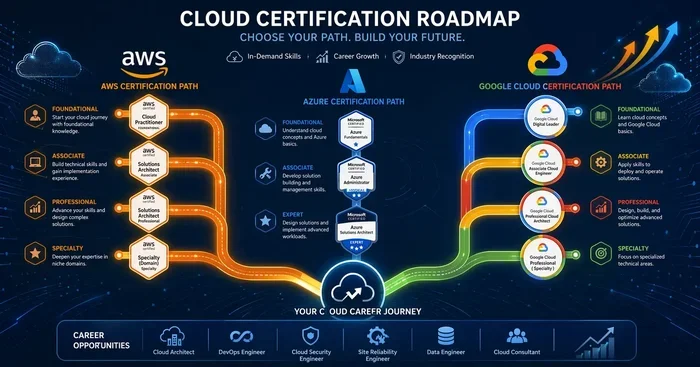
Certifications from AWS, Microsoft, and Google can boost your credibility. They show employers that you have validated your knowledge through recognized exams. But certifications alone are not enough. Combine them with hands-on projects and real-world experience for the best results.
Final Thoughts on Data Engineering and Cloud Computing
Data engineering and cloud computing are two of the most exciting and rewarding fields in technology today. They power the data-driven decisions that guide businesses, healthcare, finance, entertainment, and countless other industries. Understanding how they work gives you a powerful skill set that is in high demand.
The journey from beginner to proficient takes time and consistent effort. Start with the fundamentals, build real projects, and keep learning. The tools and technologies in this space evolve constantly, so staying curious and adaptable is key. Embrace the learning process, and you will find that data engineering and cloud computing open doors you never imagined.
Whether you want to build scalable data systems, advance your career, or simply understand how modern technology works, this guide gives you a solid starting point. The world of data and cloud is vast, but every expert started exactly where you are now. Take that first step today.
For more information on related topics, you may want to review our Terms and Conditions page for guidelines on using our resources and content.
Frequently Asked Questions
What is data engineering and cloud computing?
Data engineering and cloud computing are two interconnected fields. Data engineering focuses on building systems to collect, store, and process data. Cloud computing provides the infrastructure and platforms to run these systems over the internet without needing physical hardware.
Do I need a degree to become a data engineer?
No, you do not need a formal degree. Many successful data engineers are self-taught or come from unrelated backgrounds. What matters most is your skills, hands-on experience, and your ability to build reliable data systems using modern tools.
Which cloud platform is best for beginners?
AWS is often recommended for beginners because it has the largest community, the most tutorials, and extensive free-tier offerings. However, Microsoft Azure and Google Cloud Platform are also excellent choices. Pick one and stick with it to build deep expertise.
How long does it take to learn data engineering?
The timeline varies depending on your background and how much time you dedicate. With consistent study and practice, most beginners can build working data pipelines within three to six months. Advanced skills take longer and come with real-world experience.
What programming languages should I learn for data engineering?
Python and SQL are the two most important languages for data engineering. Python is used for scripting, data transformation, and automation. SQL is essential for querying databases and working with structured data. Together, they cover most of what you need to get started.
Are data engineering and cloud computing good career choices?
Yes, both fields offer excellent career prospects. The demand for skilled professionals continues to grow across all industries. Salaries are competitive, and there are many paths for growth, from junior roles to senior architecture and leadership positions.
=== CONCLUSION ===
Data engineering and cloud computing are essential skills for anyone looking to thrive in the modern tech landscape. From building data pipelines to managing cloud infrastructure, these fields offer endless opportunities for growth and impact. Start with the basics, practice consistently, and gradually take on more complex projects. The journey is challenging but incredibly rewarding. Keep learning, keep building, and you will find your place in this dynamic and exciting industry.