How Long Has Cloud Computing Been Around in History
Cloud computing has been around for over 70 years, evolving from early mainframe computing in the 1950s to the powerful cloud infrastructure we rely on today. Understanding how long cloud computing has been around helps us appreciate the incredible journey of cloud technology and its impact on modern business. This article covers the full cloud computing history, from its humble beginnings to the cloud services powering our digital world.
Have you ever wondered how long cloud computing has been around? It is easy to assume that cloud technology is a recent invention. After all, most of us first heard the term “cloud” in the mid-2000s. But the truth is that the roots of cloud computing history go back much further than you might think. The ideas behind cloud services started taking shape in the 1950s.
Understanding how long cloud computing has been around gives you a deeper appreciation for the technology you use every day. From shared mainframes to cloud infrastructure powering Netflix and Amazon, the journey has been remarkable. In this article, we will walk through the full timeline of cloud technology. You will learn about the key milestones, the pioneers who made it possible, and where cloud computing is headed next.
Whether you are a tech enthusiast, a business owner, or just curious, this guide covers everything you need to know. We will keep things simple and easy to follow. No jargon, no fluff. Just a clear look at the cloud computing timeline and what it all means.
Key Takeaways
- Cloud computing dates back to the 1950s: The concept of shared computing resources started with mainframe computers and time-sharing systems long before the modern internet.
- Virtualization was a game-changer: The development of virtualization in the 1970s and 1980s laid the foundation for modern cloud infrastructure.
- Amazon Web Services launched the modern cloud era: AWS debuted in 2006 and revolutionized how businesses access cloud services.
- Cloud adoption has grown exponentially: From startups to enterprises, cloud migration has become a standard strategy for organizations worldwide.
- The future of cloud computing is bright: Emerging trends like edge computing, AI integration, and hybrid cloud are shaping what comes next.
- Cloud computing is more than 70 years old: The journey from mainframes to distributed computing spans decades of innovation.
- Understanding the history helps you make better decisions: Knowing where cloud technology has been helps you predict where it is going.
📑 Table of Contents
- The Early Roots of Cloud Computing
- The Birth of Modern Cloud Technology
- Major Milestones in Cloud Computing History
- How Cloud Computing Evolved Over the Decades
- The Cloud Computing Boom: 2010 to Today
- What the Future Holds for Cloud Technology
- Common Mistakes People Make About Cloud Computing History
- Quick Tips for Understanding Cloud Computing Evolution
- Expert Insights on the Cloud Computing Journey
- Key Takeaways
- Conclusion
The Early Roots of Cloud Computing
Mainframe Computing in the 1950s and 1960s
The story of how long cloud computing has been around actually starts in the 1950s. Back then, computers were massive machines that filled entire rooms. Only large organizations like universities and government agencies could afford them. These early mainframe computers were incredibly expensive, so sharing became essential.
The concept of time-sharing emerged during this period. Time-sharing allowed multiple users to access a single mainframe computer at the same time. Each user got a small slice of computing time. This idea is a direct ancestor of modern cloud services. The principle was simple: share resources to make computing more accessible and affordable.
In 1961, Professor John McCarthy at MIT suggested that computing could one day be sold as a utility, much like electricity. This vision was ahead of its time. But it planted the seed for what would eventually become cloud computing. The idea of utility computing meant that people could rent computing power instead of owning it outright.
During the 1960s, the Advanced Research Projects Agency Network (ARPANET) was developed. ARPANET was the precursor to the modern internet. It connected computers at different universities and research labs. This network made remote computing possible for the first time. Without ARPANET, the cloud computing timeline would look very different today.
The Role of Virtualization in the 1970s and 1980s
The 1970s brought a major breakthrough that shaped cloud technology forever. IBM introduced virtual machines in 1972. A virtual machine is a software version of a physical computer. It can run its own operating system and applications just like a real machine.
Virtualization was a turning point. It allowed one physical server to run multiple virtual servers at the same time. This made cloud infrastructure more efficient and cost-effective. The concept of distributed computing also gained traction during this era.
In the 1980s, personal computers became more affordable. Companies started connecting PCs into local networks. This period saw the rise of client-server computing. Users could access shared resources on a central server. This model was a stepping stone toward the cloud services we use today.
By the late 1980s and early 1990s, the groundwork for modern cloud computing was firmly in place. Virtualization, networking, and shared resources had all matured. The pieces were falling into place for something bigger.
The Birth of Modern Cloud Technology
The Rise of the Internet in the 1990s
The 1990s changed everything for cloud technology. The World Wide Web became publicly available in 1991. The internet grew rapidly throughout the decade. Businesses started using the web for communication, commerce, and data sharing.
One of the most important developments was Application Service Providers (ASPs). ASPs offered software applications over the internet. Users did not need to install programs on their own computers. They simply accessed the software through a web browser. This model was an early form of SaaS (Software as a Service).
Salesforce, founded in 1999, is often credited as one of the first SaaS companies. Salesforce delivered customer relationship management (CRM) software through the cloud. Businesses loved the idea because it eliminated the need for expensive on-premise software. Salesforce proved that cloud services could work at scale. Its success inspired a wave of cloud adoption across industries.
The late 1990s also saw the term “cloud computing” start to appear in academic papers. Researchers used it to describe the idea of computing as a utility service delivered over the internet. The vision was clear: computing power should be as accessible as water or electricity.
Amazon Web Services and the Modern Cloud Era
The real revolution began in the mid-2000s. Amazon launched Amazon Web Services (AWS) in 2006. AWS offered cloud infrastructure services like storage and computing power to businesses and developers. This was a game-changer.
Before AWS, companies had to buy and maintain their own servers. This was expensive and time-consuming. AWS let businesses rent computing resources on demand. You could scale up or down based on your needs. This pay-as-you-go model made cloud technology accessible to companies of all sizes.
AWS launched several key services that defined modern cloud computing:
- Amazon S3 (Simple Storage Service): Launched in 2006, it provided scalable cloud storage.
- Amazon EC2 (Elastic Compute Cloud): Launched in 2006, it offered virtual servers on demand.
- Amazon Mechanical Turk: Launched in 2005, it introduced crowdsourcing through the cloud.
Other tech giants quickly followed suit. Google launched Google App Engine in 2008. Microsoft introduced Azure in 2010. Each of these platforms expanded the cloud services ecosystem. The cloud computing timeline accelerated rapidly from this point forward.
Major Milestones in Cloud Computing History
Key Events That Shaped Cloud Computing
The cloud computing history is filled with important milestones. Here is a closer look at the events that defined the cloud computing timeline:
- 1950s: Mainframe computers and time-sharing concepts emerge. Organizations share computing resources over networks.
- 1961: John McCarthy proposes computing as a utility service. This idea becomes a cornerstone of cloud computing.
- 1972: IBM introduces virtual machines. Virtualization becomes a key technology for cloud infrastructure.
- 1991: The World Wide Web goes public. The internet enables remote computing on a global scale.
- 1999: Salesforce launches as the first major SaaS provider. Cloud-delivered software gains mainstream attention.
- 2006: Amazon launches AWS with S3 and EC2. The modern cloud era officially begins.
- 2008: Google releases Google App Engine. Platform as a Service (PaaS) enters the market.
- 2010: Microsoft Azure launches. Enterprise cloud adoption accelerates across industries.
- 2011: NIST publishes the official cloud computing definition. This establishes clear standards for the industry.
- 2020s: Cloud adoption surges during the pandemic. Remote work drives demand for cloud services.
Cloud Computing Models Explained
As cloud technology evolved, different service models emerged. Understanding these models helps you grasp the full picture of how long cloud computing has been around and how it has grown:
- IaaS (Infrastructure as a Service): Provides virtualized computing resources like servers and storage. AWS EC2 and Microsoft Azure Virtual Machines are examples. This was the first model in the cloud computing timeline.
- PaaS (Platform as a Service): Offers a platform for developers to build and deploy applications. Google App Engine and Heroku are popular examples. PaaS simplified the cloud migration process for developers.
- SaaS (Software as a Service): Delivers software applications over the internet. Salesforce, Google Workspace, and Microsoft 365 are well-known examples. SaaS made cloud services accessible to everyday users.
These three models form the foundation of modern cloud computing. Each one serves different needs and use cases. Together, they power the cloud infrastructure that businesses and individuals rely on every day.
How Cloud Computing Evolved Over the Decades
From Grid Computing to Utility Computing
The evolution of cloud technology was not a single leap. It was a gradual process built on decades of innovation. In the 1990s and early 2000s, grid computing gained popularity. Grid computing connected multiple computers to work on a single large task. It was like creating a supercomputer from many smaller machines.
Grid computing was an important step toward cloud infrastructure. It demonstrated that distributed resources could work together seamlessly. Around the same time, utility computing gained attention. The idea was simple: treat computing like a utility, just like gas or electricity. You pay for what you use.
These concepts directly influenced the cloud services we know today. The pay-as-you-go model that AWS popularized was rooted in utility computing principles. Understanding this evolution helps you see that cloud computing did not appear out of nowhere. It was built on solid foundations.
The Growth of Cloud Adoption in Businesses
Cloud adoption grew steadily through the 2010s. More and more businesses recognized the benefits of moving to the cloud. These benefits included lower costs, better scalability, and improved flexibility. Enterprise cloud solutions became a standard part of IT strategy.
By 2015, the cloud computing market was booming. Companies of all sizes were adopting cloud services. Startups used the cloud to launch products quickly without large upfront investments. Large enterprises used the cloud to modernize their IT infrastructure. The cloud migration trend became impossible to ignore.
The COVID-19 pandemic in 2020 accelerated cloud adoption even further. With millions of people working remotely, businesses needed reliable cloud infrastructure. Tools like Zoom, Slack, and Microsoft Teams all rely on cloud technology. The pandemic proved that cloud services are essential for modern business operations.
The Cloud Computing Boom: 2010 to Today
Key Players in the Cloud Market
The cloud computing market has become one of the largest technology sectors in the world. A few major players dominate the industry:
- Amazon Web Services (AWS): The market leader with the largest share of cloud infrastructure services. AWS offers over 200 services ranging from computing to machine learning.
- Microsoft Azure: The second-largest cloud platform. Azure excels in enterprise cloud solutions and integrates well with Microsoft products.
- Google Cloud Platform (GCP): Known for its strength in data analytics, AI, and machine learning. GCP offers powerful cloud services for developers and data scientists.
- IBM Cloud: Focuses on hybrid cloud solutions and enterprise-grade services. IBM has a strong presence in industries like finance and healthcare.
- Oracle Cloud: Offers cloud services with a strong focus on database management and enterprise applications.
These companies have invested billions in cloud infrastructure. Their competition drives innovation and keeps prices competitive. For businesses, this means better cloud services at more affordable rates.
Hybrid Cloud and Multi-Cloud Strategies
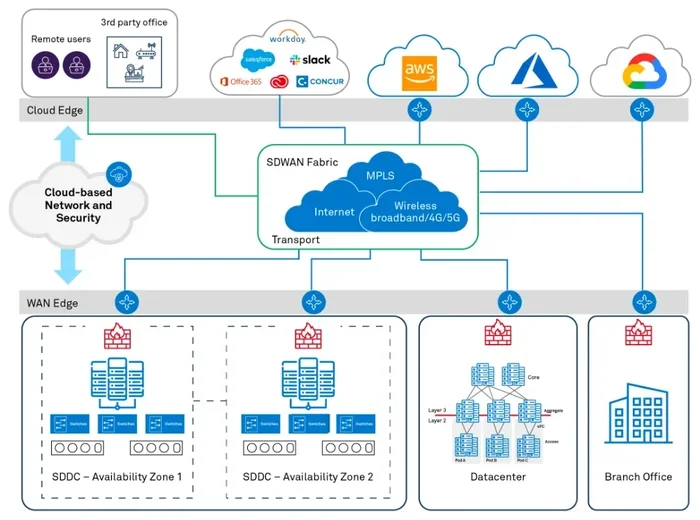
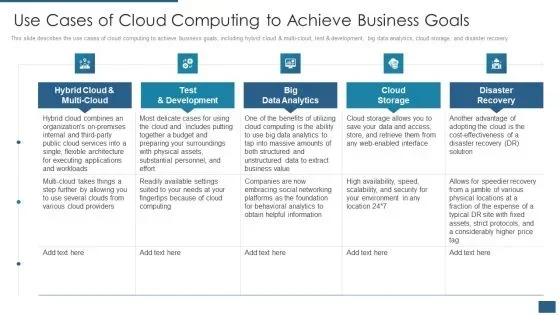
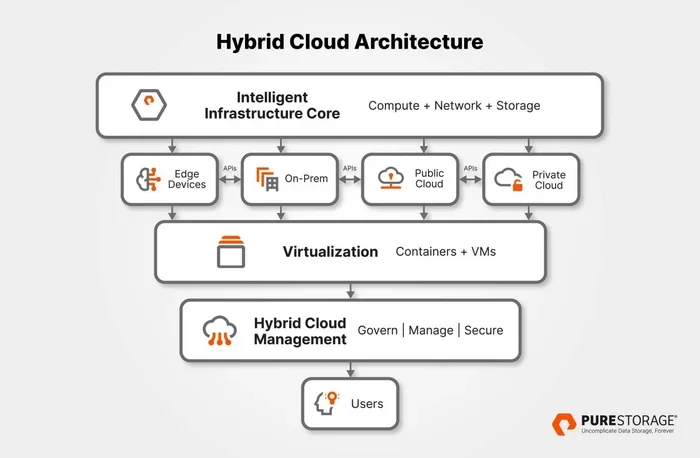
As cloud technology matured, new deployment models emerged. Hybrid cloud combines on-premise infrastructure with cloud services. This approach gives businesses flexibility and control. They can keep sensitive data on their own servers while using the cloud for less critical workloads.
Multi-cloud strategies involve using multiple cloud providers simultaneously. A company might use AWS for storage, Azure for computing, and GCP for AI services. This approach avoids vendor lock-in and provides redundancy. Both hybrid cloud and multi-cloud strategies are growing trends in cloud migration.
These strategies reflect how far cloud computing has come. Businesses now have more options than ever to tailor their cloud infrastructure to their specific needs. The flexibility of modern cloud services is one of the biggest advantages of the technology.
What the Future Holds for Cloud Technology
Emerging Trends in Cloud Computing
The cloud computing timeline is far from complete. New trends are shaping the future of cloud technology. Here are some of the most exciting developments:
- Edge Computing: Processes data closer to where it is generated. This reduces latency and improves performance for IoT devices and real-time applications.
- AI and Machine Learning Integration: Cloud providers are embedding AI capabilities into their cloud services. This makes advanced tools more accessible to businesses of all sizes.
- Serverless Computing: Allows developers to build applications without managing servers. The cloud provider handles the infrastructure automatically. This is a major step forward in cloud infrastructure.
- Green Cloud Computing: Focuses on reducing the environmental impact of data centers. Companies are investing in renewable energy and energy-efficient hardware for their cloud services.
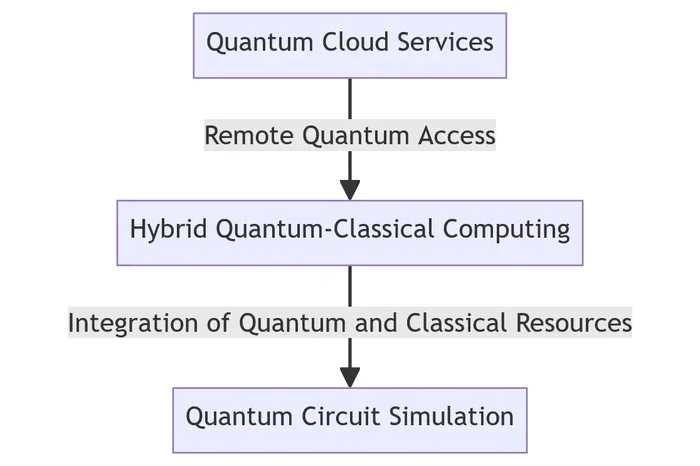
- Quantum Computing in the Cloud: Cloud providers are beginning to offer quantum computing resources. This could revolutionize fields like cryptography, drug discovery, and optimization.
The future of cloud computing is incredibly promising. As cloud technology continues to evolve, it will unlock new possibilities for businesses and individuals alike. Understanding the cloud computing history helps you anticipate what is coming next.
Why Knowing the History Matters
You might be wondering why it matters to know how long cloud computing has been around. The answer is simple: history provides context. When you understand where cloud technology came from, you can better understand where it is going.
The cloud computing timeline shows a pattern of continuous innovation. Each decade brought new breakthroughs that built on the work of the previous generation. This pattern is likely to continue. The cloud services we use today are the result of over 70 years of progress.
For businesses, this historical perspective is valuable. It helps you make informed decisions about cloud migration and cloud adoption. You can see which trends have stood the test of time and which were short-lived fads. The track record of cloud computing speaks for itself.
Common Mistakes People Make About Cloud Computing History
There are a few misconceptions about how long cloud computing has been around that are worth addressing:
- Mistake 1: Thinking cloud computing started with AWS. While AWS launched the modern cloud era in 2006, the concepts behind cloud technology existed decades earlier.
- Mistake 2: Confusing cloud computing with the internet. The internet is the network that delivers cloud services. But cloud computing is a specific model of delivering computing resources. They are related but not the same thing.
- Mistake 3: Assuming cloud computing is only for big companies. Cloud services are used by businesses of all sizes, including solo entrepreneurs and freelancers. The cloud migration trend has made cloud tools accessible to everyone.
- Mistake 4: Ignoring the role of virtualization. Virtualization was a critical enabler of modern cloud infrastructure. Without it, the cloud computing timeline would look very different.
Quick Tips for Understanding Cloud Computing Evolution
- Start with the basics: Learn the core concepts of cloud computing before diving into the history. Understanding IaaS, PaaS, and SaaS gives you a solid foundation.
- Follow the timeline: Trace the cloud computing timeline from mainframes to modern cloud services. Each era built on the innovations of the previous one.
- Watch for trends: Keep an eye on emerging trends like edge computing and AI integration. These will shape the next chapter of cloud technology.
- Think about your own use: Consider how you already use cloud services in your daily life. Streaming, email, and file storage all rely on cloud infrastructure.
- Stay curious: The cloud computing history is still being written. New developments happen all the time. Stay informed and keep learning.
Expert Insights on the Cloud Computing Journey
Industry experts often point to the cloud computing timeline as one of the most transformative stories in technology history. According to analysts, the shift from on-premise IT infrastructure to cloud services has been the defining technology trend of the past two decades.
Cloud migration is no longer optional for most businesses. It has become a strategic necessity. Companies that embrace cloud technology gain advantages in speed, scalability, and innovation. Those that resist risk falling behind.
Experts also highlight the importance of understanding the full cloud computing history. When businesses see how far cloud computing has come, they are more confident in adopting it. The journey from shared mainframes to cloud infrastructure proves that innovation builds on itself. Each generation of technology enables the next.
The next decade promises even more exciting developments. As cloud services become more sophisticated, they will continue to transform industries and everyday life. The best is yet to come for cloud technology.
Key Takeaways
- Cloud computing dates back to the 1950s: The concept of shared computing resources started with mainframe computers and time-sharing systems long before the modern internet.
- Virtualization was a game-changer: The development of virtualization in the 1970s and 1980s laid the foundation for modern cloud infrastructure.
- Amazon Web Services launched the modern cloud era: AWS debuted in 2006 and revolutionized how businesses access cloud services.
- Cloud adoption has grown exponentially: From startups to enterprises, cloud migration has become a standard strategy for organizations worldwide.
- The future of cloud computing is bright: Emerging trends like edge computing, AI integration, and hybrid cloud are shaping what comes next.
- Cloud computing is more than 70 years old: The journey from mainframes to distributed computing spans decades of innovation.
- Understanding the history helps you make better decisions: Knowing where cloud technology has been helps you predict where it is going.
Conclusion
How long has cloud computing been around? The answer might surprise you. Cloud computing has been part of the technology landscape for over 70 years. From the early days of mainframe computers and time-sharing in the 1950s, to the cloud services that power our digital lives today, the journey has been extraordinary.
The cloud computing history is a story of continuous innovation. Each decade brought new breakthroughs that built on the work of the previous generation. Virtualization in the 1970s, the rise of the internet in the 1990s, the launch of AWS in 2006, and the cloud adoption boom of the 2020s. Every chapter added something important to the cloud computing timeline.
Today, cloud technology is everywhere. It powers the apps on your phone, the websites you visit, and the tools businesses use to operate. Cloud infrastructure has become the backbone of the digital economy. Understanding how long cloud computing has been around gives you a richer perspective on this incredible technology.
As we look to the future, the possibilities are endless. Edge computing, AI integration, and serverless computing are just the beginning. The next chapter of the cloud computing history is being written right now. And it promises to be even more exciting than what has come before.
Whether you are a business owner planning your cloud migration, a developer building on cloud services, or simply someone curious about technology, the story of cloud computing has something for you. It is a story of innovation, collaboration, and the relentless pursuit of making computing more accessible to everyone. Embrace the journey, stay curious, and keep exploring the world of cloud technology.
Frequently Asked Questions
When did cloud computing actually start?
The concept of cloud computing started taking shape in the 1950s with mainframe computers and time-sharing systems. However, the modern cloud era began in 2006 when Amazon launched AWS. The full cloud computing history spans over seven decades of innovation.
Who invented cloud computing?
There is no single inventor of cloud technology. The ideas evolved over decades. Professor John McCarthy proposed computing as a utility in 1961. IBM pioneered virtualization in the 1970s. Amazon Web Services launched the first major cloud infrastructure platform in 2006. Many contributors shaped the cloud computing timeline.
What was the first cloud service?
The first SaaS (Software as a Service) model was introduced by Salesforce in 1999. Salesforce delivered CRM software over the internet. However, the concept of cloud services existed earlier in the form of Application Service Providers in the mid-1990s.
How has cloud computing changed over the years?
Cloud computing has evolved from shared mainframe resources to a vast ecosystem of cloud services. Early cloud technology focused on basic storage and computing. Today, cloud infrastructure includes AI, machine learning, serverless computing, and hybrid cloud solutions. The cloud adoption rate has grown exponentially since 2006.
Is cloud computing still growing?
Yes, cloud services are still growing rapidly. Cloud adoption continues to increase across industries. Emerging trends like edge computing, green cloud, and quantum computing are driving the next wave of innovation. The cloud computing timeline is far from complete.
Why is understanding cloud computing history important?
Understanding how long cloud computing has been around helps you appreciate the technology and make better decisions. The cloud computing history shows a pattern of continuous innovation. It also helps businesses anticipate future trends and choose the right cloud migration strategies for their needs.